Disclosure: We may earn a commission if you purchase through links on this page, at no additional cost to you. Our editorial conclusions are developed independently.
Quick answer
What are the ingredients in Gluco6?
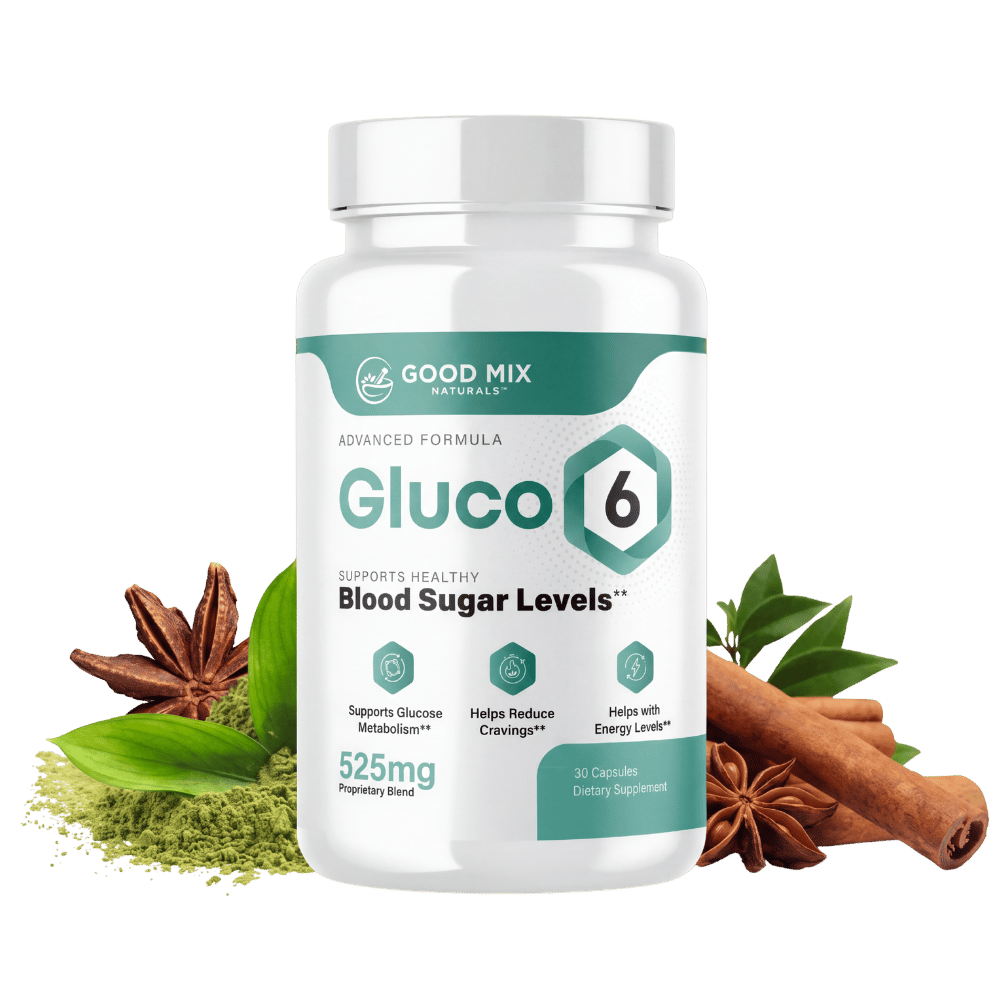
Gluco6 contains vitamin D3, vitamin B1 and chromium in individually disclosed amounts, plus a 525 mg proprietary blend with L-arabinose, theobromine, green tea extract, eleuthero, theacrine (TeaCrine), cassia cinnamon and Gymnema sylvestre.
You are probably checking the ingredient list for one simple reason: Gluco6 sounds easy to use, but before spending your money you want to know whether there is enough substance behind the formula. That is the right question to ask.
Why buyers look twice
The appeal of Gluco6 is easy to understand
Most people do not want another complicated routine. Gluco6 is built around a very simple proposition: one capsule a day, recognizable ingredients associated with glucose support, and no need to assemble a shelf full of separate supplements.
That simplicity is commercially attractive. Ingredients such as chromium, Gymnema, cinnamon, green tea and L-arabinose are names buyers may already recognize from blood-sugar-support formulas. Gluco6 puts them into a single capsule instead of asking you to manage several products.
But convenience is only half of the buying decision. The other half is whether the label gives you enough information to feel comfortable with what you are paying for. That is where the 525 mg proprietary blend becomes important.
The label at a glance
What you are actually getting in one Gluco6 capsule
The physical Supplement Facts panel gives exact amounts for three ingredients and one combined amount for the rest. This is the fastest way to understand the formula without turning a buying guide into a research paper.
| Label item | Amount | Disclosure | Why it matters |
|---|---|---|---|
| Vitamin D3 | 50 mcg | Exact dose shown | You know the labeled amount in every daily serving. |
| Vitamin B1 | 100 mg | Exact dose shown | No guessing about how much B1 the capsule contains. |
| Chromium | 1 mg | Exact dose shown | This is one of the few Gluco6 ingredients you can compare directly with published dose ranges. |
| Proprietary blend | 525 mg total | 7 ingredients share one number | You know what is inside the blend, but not how much of each blend ingredient you receive. |
Evidence trail: PRM uses the physical Gluco6 label as the controlling source for formula details. The deeper ingredient-by-ingredient evidence record is maintained in the Gluco6 Research Dossier .
Inside the 525 mg blend
Seven ingredients are doing the heavy lifting in the sales story
The proprietary blend is where Gluco6 becomes more interesting — and where a careful buyer naturally has more questions. These are not random filler ingredients. Several have human research behind them. The limitation is that Gluco6 does not tell you the individual dose of any of them.
Blend ingredient
L-Arabinose / Sukre
One of the formula’s strongest marketing hooks. L-arabinose has human research related to post-meal glucose and insulin response, but the Gluco6 label does not disclose its individual amount.
Blend ingredient
Gymnema Sylvestre
A familiar ingredient in glucose-support supplements with human research behind it. The question is not whether Gymnema is present — it is — but how much the capsule provides.
Blend ingredient
Cassia Cinnamon
The physical label identifies Cinnamomum cassia bark. Cinnamon is easy for buyers to recognize, but its individual Gluco6 dose is not disclosed.
Blend ingredient
Green Tea Extract
The label specifies green tea leaf extract standardized to polyphenols and EGCG. That is useful detail, even though the number of milligrams inside the blend remains unknown.
Blend ingredient
TeaCrine / Theacrine
TeaCrine gives Gluco6 another recognizable branded ingredient story. Human studies use known theacrine doses, while the amount in Gluco6 is hidden inside the blend.
Blend ingredient
Theobromine + Eleuthero
These two ingredients appear on the physical label even though they receive less attention in the seller’s simplified formula story. Both share the same 525 mg total with the other blend ingredients.
The question that actually matters
Is the 525 mg proprietary blend a reason to walk away?
Not automatically. This is where ingredient pages often become less useful than they should be. A proprietary blend is a transparency trade-off — not proof that the product is bad, and not proof that it works.
If what you want is a simple one-capsule routine with several recognizable ingredients in one formula, Gluco6 still has an obvious appeal. If your buying rule is “I need to see the exact clinical dose of every active ingredient,” the blend will probably bother you.
The real decision is not whether proprietary blends are universally good or bad. It is whether the convenience Gluco6 offers is worth accepting less dose-by-dose visibility.
One useful reality check
Can the Gluco6 formula be matched directly to the research?
Only partly. Chromium has its own disclosed amount, so you can compare the label with published research. Most of the proprietary-blend ingredients cannot be matched with the same confidence because their individual amounts are unknown.
Human L-arabinose research
Published trials used gram-level amounts
A randomized crossover study used 1 g, 2 g or 3 g of L-arabinose with sucrose and reported changes in post-meal glucose and insulin response.
What the Gluco6 label tells us
The entire seven-ingredient blend totals 525 mg
Because L-arabinose is only one part of that blend, the amount in Gluco6 must be below 525 mg. That means the ingredient research cannot simply be presented as proof that the finished capsule reproduces the same studied exposure.
This does not erase the appeal of the formula. It simply tells you what kind of product you are buying: a convenient multi-ingredient supplement, not a fully disclosed clinical-dose formula.
If that trade-off works for you
You already know the main limitation. The next question is whether the current offer makes sense.
If a one-capsule formula matters more to you than seeing every internal milligram, Gluco6 may still fit what you were looking for.
Marketing story vs physical label
The seller talks about a “Super 6.” The bottle gives you a little more than that.
The seller’s simplified formula story focuses attention on six recognizable ingredients. That makes the product easier to understand quickly — which is exactly what good sales copy is supposed to do.
The physical label is broader. It also includes vitamin D3, vitamin B1, theobromine and eleuthero. For a buyer, that is not necessarily a problem. It simply means the full formula is more complex than the headline marketing version.
Why Gluco6 may appeal to you
You want the routine to stay simple
- One capsule is easier to maintain than a multi-product supplement stack.
- The formula combines several ingredients buyers already associate with glucose support.
- Three ingredients have fully disclosed amounts.
- You can inspect the entire ingredient list before ordering.
Why you might hesitate
You want maximum formula transparency
- Seven ingredients do not have individual doses.
- You cannot verify dose matching for most of the blend.
- The finished formula should not be treated as clinically proven simply because individual ingredients have research.
- You may prefer a supplement that discloses every active dose separately.
One label detail worth knowing
What about the “No Stimulants” claim?
The current seller presentation uses “No Stimulants” language, while the physical label includes theacrine (TeaCrine) and theobromine. Because the amounts are not disclosed, that does not tell us how noticeable either ingredient would be in the finished capsule.
For most buyers, this is not the central reason to buy or reject Gluco6. It is simply another example of why reading the physical label gives you a more complete picture than relying on a marketing badge alone.
Our buying read
Who is the Gluco6 formula most likely to make sense for?
If you came here hoping to discover a perfectly transparent clinical formula, Gluco6 is not that. If you came here looking for a simple, one-capsule product that brings several familiar glucose-support ingredients together , the formula is much easier to understand.
The proprietary blend is the main compromise. But once you know that before ordering, the decision becomes much cleaner: either exact dose disclosure is essential to you, or the convenience and overall ingredient profile matter more.
That is a much better reason to choose — or skip — Gluco6 than simply reacting to a long ingredient list.
Ready to compare the formula with the offer?
If Gluco6 still fits what you want, check the current package options before you decide.
The ingredient question is only one part of the purchase. The full Review covers the broader buying decision, while the current offer shows today’s package options and availability.
FAQ
Gluco6 ingredient questions buyers ask before ordering
What are the ingredients in Gluco6?
Gluco6 contains vitamin D3, vitamin B1 and chromium in individually disclosed amounts, plus a 525 mg proprietary blend containing L-arabinose, theobromine, green tea extract, eleuthero, theacrine (TeaCrine), cassia cinnamon and Gymnema sylvestre.
Does Gluco6 disclose the dose of every ingredient?
No. Vitamin D3, vitamin B1 and chromium have individual amounts. Seven other ingredients share a 525 mg proprietary blend, so their individual doses are not shown.
How much L-arabinose is in Gluco6?
The exact amount is not disclosed. L-arabinose is one of seven ingredients inside the 525 mg proprietary blend, so its individual amount must be lower than the full 525 mg blend total.
Does Gluco6 use cassia or Ceylon cinnamon?
The physical Supplement Facts panel reviewed by PRM identifies Cinnamomum cassia bark.
Is the Gluco6 proprietary blend a deal-breaker?
That depends on how you shop. If you require exact dose disclosure for every active ingredient, the proprietary blend is a meaningful limitation. If you prioritize a simple one-capsule routine and are comfortable with partial dose disclosure, it may not be a deal-breaker.
Has the complete Gluco6 formula been clinically tested?
PRM did not identify a randomized clinical trial of the current finished Gluco6 formula in its targeted research. Individual ingredients have human research, but that is different from proving the complete product produces the same outcomes.
Where can I see the full Gluco6 evidence review?
The Gluco6 Research Dossier contains PRM’s deeper source record, evidence mapping and limitations. The full Gluco6 Review covers the broader purchase decision.
How this guide was prepared: Pro Review Metric compared the physical Gluco6 Supplement Facts panel with the seller presentation and the independent evidence record maintained in the Gluco6 Research Dossier. Seller claims remain seller claims, and labels or offer terms can change.