Disclosure: We may earn a commission if you purchase through links on this page, at no additional cost to you. Our editorial conclusions are developed independently.
A closer look at what’s actually in the drops
What ingredients are actually in Sugar Defender?
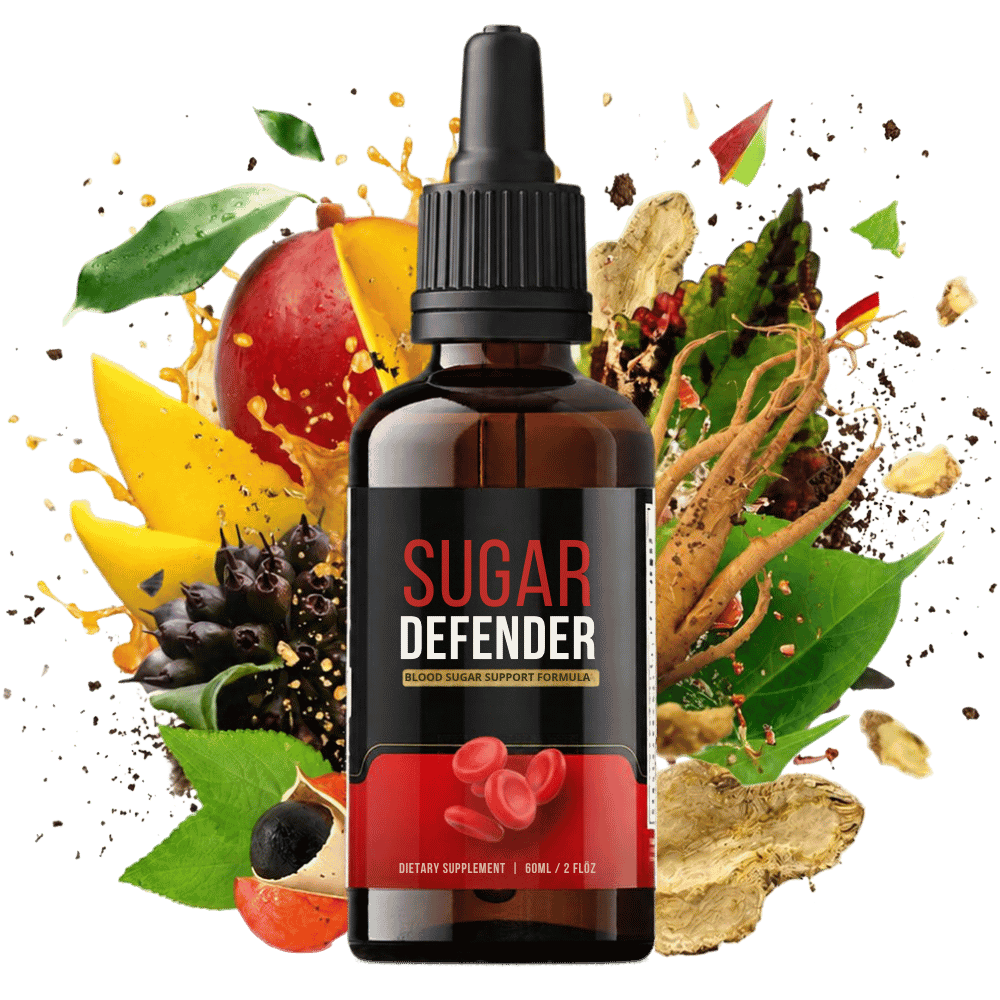
Sugar Defender is a liquid supplement combining chromium with a proprietary blend of 22 botanicals and other compounds. Its published Supplement Facts panel lists 0.7 mcg of chromium and 200 mg for the entire blend per 1 mL serving. The formula brings several ingredient categories into one bottle, but it does not disclose the individual blend doses.
When you’re already trying to make consistent choices about meals, movement and everyday wellbeing, adding a supplement shouldn’t mean managing a dozen separate bottles. That’s why a single liquid formula can catch your attention: it promises a simpler product format, not another complicated shopping list.
Sugar Defender brings several familiar botanical categories into one drop-based product. The practical advantage is being able to evaluate one formula rather than assemble a stack of different supplements. Whether that formula is right for you still depends on what the label says and how the product fits your circumstances.
We’ll start with the ingredients the seller highlights, examine what else appears on the label, and use two figures to ground the comparison: 200 mg for the shared blend and 0.7 mcg for chromium. You’ll also see why the published daily directions need clarification before you decide what supply to order.
Source: seller-published Supplement Facts image, checked October 27, 2026. The figures describe the displayed label, not a laboratory assay of an individual bottle.
The numbers that control this discussion
What does the Sugar Defender Supplement Facts label disclose?
It discloses the amount of one mineral and the total weight of one multi-ingredient blend. The label image shows a 60 mL bottle with 60 servings of 1 mL each, a line for chromium, the names of 22 blend components and a separate list of ingredients used in the liquid base. It does not quantify caffeine, individual herbs or amino acids.
| Label line | Published amount | What it means for you |
|---|---|---|
| Serving size | 1 mL; 60 servings per bottle | A label fact, not a confirmed match for the sales page’s two-dropper routine. |
| Chromium (as chromium picolinate) | 0.7 mcg; 2% DV | The only individually disclosed active amount. |
| Proprietary Herbal Blend | 200 mg total for 22 entries | No way to calculate the individual amount of gymnema, ginseng, guarana or any other blend component. |
| Other ingredients | Names only | Water, organic citrus extract, natural flavors, stevia and xylitol form part of the liquid product. |
The label gives you a useful starting point: it identifies the ingredients you would be bringing into your routine. That’s valuable for screening preferences and medication questions. It does not tell you whether any individual botanical is present at the same dose or in the same form used in a clinical study. Those are separate judgments.
A marketing shortlist versus the full panel
Why does Sugar Defender advertise eight or 24 ingredients when its label lists 23?
The eight featured names are a selection, not the whole formula. The seller’s main page calls Sugar Defender a blend of “24 proven ingredients,” then introduces eight familiar ingredients in its marketing tour. The published Supplement Facts image names 23 active entries: chromium separately and 22 components in the 200 mg blend. Those are three different presentations; the displayed label does not reconcile the 24-ingredient claim.
| Where you see it | The number | How to read it |
|---|---|---|
| Sales headline | 24 ingredients | Seller marketing claim; not reconciled to the displayed panel |
| Featured ingredient tour | 8 ingredients | A selected introduction to the formula, not a complete inventory |
| Published Supplement Facts | 23 active entries | One quantified mineral plus 22 shared-blend entries |
The promotional eight are eleuthero, coleus, maca, African mango, guarana, gymnema, Panax ginseng and chromium. They’re useful starting points because they explain the seller’s positioning around glucose support, energy and metabolism. They’re not a substitute for reading the remaining ingredients, some of which matter more for tolerability than advertising appeal.
What the marketing gets across
A simple way to recognize the formula
Instead of asking you to decode twenty-three names at once, the seller emphasizes a few recognizable plants and one mineral. This makes the formula’s intended themes easier to follow.
What the full panel adds
The rest of the ingredients still count
Green tea, grape seed, grapefruit seed, amino-acid compounds and a licorice-derived substance also appear in the blend. A suitability review has to consider them, even though they are less prominent on the sales page.
For clarity, berberine, cinnamon, bitter melon and alpha-lipoic acid are not listed in the seller-published label used here. They may be familiar from other glucose supplements, but they shouldn’t be attributed to this formula.
Every name, without the guesswork
What are the 22 ingredients inside Sugar Defender’s 200 mg blend?
All 22 components below share one combined 200 mg per labeled 1 mL serving. The groupings are editorial reading aids, not separate sub-blends or claims that the ingredients produce a measured effect. The label does not state their individual amounts.
| Useful reading group | Ingredients named on label | Dose information |
|---|---|---|
| Glucose- and plant-focused | Gymnema sylvestre leaf; Panax ginseng root; astragalus root; grape seed; grapefruit seed | Each amount undisclosed |
| Energy and metabolic positioning | Maca root; guarana seed; African mango fruit; eleuthero root; green tea leaf; coleus forskohlii root; capsicum fruit; raspberry ketones | Each amount undisclosed |
| Amino acids and related compounds | L-glutamine; L-tyrosine; L-arginine; beta-alanine; GABA; L-ornithine HCl; L-tryptophan; L-carnitine | Each amount undisclosed |
| Additional compound | Monoammonium glycyrrhizinate (licorice-derived) | Amount undisclosed |
There are 5 + 8 + 8 + 1 = 22 named blend entries. Add the separately listed chromium and the seller’s label has 23 active entries. Neither the breadth nor the order of this list provides PRM with an exact milligram figure for each ingredient. In particular, none should be described as providing 200 mg on its own.
Compare the seller label artwork with the seller headline and eight-ingredient presentation, checked October 28, 2026. Do not treat “24 proven” as an audited ingredient count or an efficacy finding.
The ingredients most shoppers recognize first
What do chromium, gymnema, ginseng and guarana add to Sugar Defender?
These four ingredients explain much of the formula’s identity: a trace mineral with a published amount, botanicals frequently discussed in glucose research, and a stimulant-containing plant often linked to energy marketing. Understanding their roles is more useful than counting them. None proves a benefit from this exact mixture.
Chromium · individually disclosed
Chromium: the one ingredient with a visible amount
Chromium is a trace element studied for glucose metabolism. The label lists 0.7 mcg, or 2% DV — far below many quantities evaluated in clinical supplementation trials. NIH reviews report mixed results and insufficient grounds to assume that this tiny declared amount produces meaningful glucose changes.
Buyer implication: unlike the blend components, we know the numerical chromium amount. Its presence should not be mistaken for trial-level efficacy.
Gymnema · blend dose hidden
Gymnema: familiar in glucose-focused research
Gymnema sylvestre is often discussed in the context of sweet taste and glucose handling. Research is limited and varies by extract and dose. Sugar Defender’s label confirms gymnema leaf extract is present but not how much is included.
Buyer implication: a familiar botanical name is not enough to reproduce a study’s protocol or infer a result for this formula.
Panax ginseng · blend dose hidden
Ginseng: a widely studied botanical category
Panax ginseng has been examined in small, heterogeneous studies, including some involving glucose measures. Different species, standardized extracts and quantities cannot simply be treated as interchangeable. Here the individual dose is missing.
Buyer implication: the plant is part of the identity of the formula, not proof of a clinically meaningful A1C effect.
Guarana · blend dose hidden
Guarana: energy positioning, with a caffeine question
Guarana naturally contains caffeine; green tea appears elsewhere in the same blend. Sugar Defender’s label does not disclose their individual quantities or a measured caffeine total. A reader sensitive to stimulation has a real information gap to resolve.
Buyer implication: “liquid and convenient” does not necessarily mean “stimulant-free” or suitable for every routine.
Other highlighted botanicals broaden the marketing theme: maca and eleuthero are associated with vitality, while African mango and coleus are frequently advertised in weight-management products. Their inclusion can make Sugar Defender attractive to someone seeking an all-in-one ritual, but the product’s panel does not provide independently evaluable doses for those claims.
Independent context: NIH Office of Dietary Supplements — Chromium · NCCIH — Diabetes and Dietary Supplements.
Four more names the seller puts in the spotlight
What about eleuthero, maca, African mango and coleus?
The other four highlighted botanicals broaden the product beyond a single glucose-focused ingredient. Their inclusion helps explain the seller’s energy and weight-management positioning, but the amount of each is still part of the shared 200 mg blend — not an independently disclosed dose.
Adaptogenic-plant positioning
Eleuthero root
Eleuthero is often marketed in products aimed at everyday resilience and fatigue. Here it contributes to the formula’s broad vitality positioning.
What matters: eleuthero helps explain the product’s wide botanical positioning, but should not be read as a separate promise of improved stamina.
Traditional vitality positioning
Maca root
Maca is familiar from supplements promoted around general vitality. In Sugar Defender, its role is part of the mixed botanical approach rather than a documented blood-glucose outcome.
What matters: if maca is the ingredient that interests you most, this combination is not directly comparable to a maca-only product with a defined preparation.
Weight-management positioning
African mango fruit
African mango appears in weight-management supplement marketing. Its presence helps explain why Sugar Defender’s sales page talks about both metabolic support and body weight.
What matters: use the ingredient name to understand the seller’s positioning, not to assume a particular weight-management result.
Botanical extract positioning
Coleus forskohlii root
Coleus is frequently marketed in metabolism-oriented blends. That makes its inclusion understandable within Sugar Defender’s product story.
What matters: studies of standardized coleus extracts do not tell you what to expect from this mixed liquid formula.
Put together, those eight featured names tell you how the supplement is positioned: one liquid product spanning glucose-related, energy and weight-management ingredient categories. That is a product-format and composition proposition, not proof that each category produces a benefit.
What the sales-page shortlist leaves in the background
Which less-promoted Sugar Defender ingredients are worth checking?
The complete formula matters most when a background ingredient affects your tolerance, preferences or medications. Three groups deserve attention without turning this Ingredients Guide into a duplicate of the Side Effects Guide.
Plant compounds and caffeine context
Green tea leaf, grape seed and grapefruit seed
These ingredients extend the botanical mix. Green tea can introduce caffeine considerations alongside guarana, while the exact grapefruit seed preparation is not specified on the label.
Buyer question: Are any of these plants relevant to your medication or stimulant sensitivity? The separate blend doses aren’t provided, so confirm suitability rather than assuming there is no exposure.
Eight individually unquantified compounds
Amino acids and related ingredients
The blend lists L-glutamine, L-tyrosine, L-arginine, beta-alanine, GABA, L-ornithine HCl, L-tryptophan and L-carnitine.
Buyer question: Does a long list of familiar compound names help your specific decision if their amounts are unknown? It provides breadth, not dose-matched evidence of an outcome.
Additional botanical and licorice context
Astragalus, capsicum, raspberry ketones and a licorice-derived compound
Astragalus root, capsicum fruit, raspberry ketones and monoammonium glycyrrhizinate appear in the full inventory. They don’t receive the same marketing attention as chromium or gymnema.
Buyer question: Have you considered the whole combination, particularly if you use medication or have health conditions? The presence of a licorice-derived component warrants a suitability discussion, not an assumed dose-specific effect.
The purpose of reviewing these entries isn’t to make the label sound intimidating. It is to prevent an easy mistake: deciding on the basis of eight attractive names when the actual formula includes many more variables.
The largest unknown inside the formula
Is a 200 mg proprietary blend enough to judge Sugar Defender’s ingredient doses?
No. The 200 mg figure is the total weight of all 22 entries, not the amount of any one botanical. A formula may legitimately use a proprietary blend, but the format prevents a reader from matching any individual component to the exposure used in a clinical paper.
What is known
One clear amount for the complete blend
The label names all 22 components and shows their total weight. You can screen ingredient names, recognize the format and ask meaningful questions before choosing a package.
What remains undisclosed
The amount of each component
You cannot calculate how much gymnema, ginseng, guarana or any other blend ingredient is delivered in a labeled serving. Total caffeine is not quantified, either.
That is the central trade-off: a broad list may feel comprehensive and the liquid format may be convenient, but more ingredients are not automatically more evidence. The useful comparison is between the simplicity you value and the amount of dosage certainty you need.
The serving-size question buyers should not overlook
Why does the label say 60 servings while the sales page calls a bottle a 30-day supply?
The two statements reflect different published directions. The seller-hosted label artwork declares 1 mL per serving, 60 servings per 60 mL bottle and instructs adults to take 1 mL daily, or as directed by a healthcare professional. A separate seller order-page FAQ tells customers to take two full droppers in the morning, and the offer describes a bottle as a 30-day supply. The exact volume delivered by a “full dropper” is not established by the marketing text.
It would be tempting to infer that two droppers are exactly 2 mL and that the product provides 30 daily doses. We have not independently verified the dropper’s actual delivered volume, the specific instructions printed on shipped bottles or whether the marketing wording reflects a revised routine. We therefore do not reconcile the numbers by guessing.
This detail affects the practical cost per day, how long a bottle lasts and the quantity of each ingredient actually consumed. Those calculations belong to the eventual Price Guide only after the route’s usage instructions are reconciled.
Compared sources: published label and seller order-page directions and package durations. These are seller-controlled materials, not a PRM-tested dosing regimen.
What research can and cannot be transferred
Do studies of Sugar Defender’s individual ingredients prove the finished drops work?
No. Ingredient-level studies do not establish clinical results for this exact twenty-three-entry product. Research involving chromium, ginseng and other botanicals varies in quality, study population, intervention amount and measured outcome. The NIH’s NCCIH cautions that supplements studied for diabetes generally have insufficient evidence for definite clinical conclusions and should not replace evidence-based care.
To claim that a finished blend reliably lowers fasting glucose or A1C, we would need appropriately designed trials of the actual blend at the actual daily dose, with clear clinical outcomes. PRM has not independently verified such a finished-product trial in the materials reviewed. The seller’s references to studies on individual compounds cannot close that gap.
There is also a difference between supporting general nutrition and treating high blood sugar. Sugar Defender is marketed as a dietary supplement, not a clinically proven treatment for diabetes. Buyers with diabetes or prediabetes should not replace their prescribed medications, testing or follow-up care based on its claims.
Why a ready-made liquid formula may appeal
What is the practical advantage of Sugar Defender’s liquid format?
The clearest advantage is a simpler product routine: a single liquid formulation groups a range of named botanicals and related compounds. You don’t have to shop separately for every category to see what the seller has combined. That convenience is meaningful if the complete ingredient list and directions are appropriate for you.
For someone who prefers drops over multiple capsules, that may be the most relevant practical difference. The trade-off is less control over individual components, which makes checking the overall formula more important.
One formula
Less product comparison to manage
Instead of screening several separate supplement bottles, you can examine one complete list. That can make your initial decision more manageable.
The trade-off: you can’t choose the amount of each herb independently.
Liquid delivery
An alternative to a capsule-heavy routine
If you prefer drops to multiple pills, the delivery format may fit your preferences. Ease of use is a personal advantage, not an evidence claim about absorption or results.
The trade-off: the exact daily volume must be clarified because seller instructions differ.
Recognizable variety
Several ingredient categories in one place
Chromium, gymnema, Panax ginseng and additional botanicals explain why the supplement appeals to people comparing multiple categories of metabolic-wellness products.
The trade-off: variety does not mean each component is present at a studied amount.
One purchasing decision
A clear starting point for comparing an offer
Once you understand the formula, you can review the seller’s package options and total cost without first building a shopping list of separate ingredients.
The trade-off: a larger bundle only makes sense after suitability, directions and transaction terms are clear.
What does not show up on this label
Does Sugar Defender contain berberine, cinnamon or bitter melon?
None of those three ingredients appears on the seller-published Sugar Defender label reviewed for this Guide. Nor does the panel list alpha-lipoic acid. That matters because supplement searches often surface articles about a broad category of glucose ingredients rather than the exact contents of the bottle being considered.
The absence of those ingredients is neither a weakness nor a strength by itself. It means the decision should follow the formula actually sold, not a borrowed list from another product. The same principle applies when comparing Sugar Defender with the different formulation documented in PRM’s Gluco6 Review.
The choice behind the label
Your morning already has enough decisions. Your supplement shouldn’t add guesswork.
Breakfast, a busy schedule and the health habits you’re trying to keep consistent already ask for attention. For some people, that may also include glucose readings or a medication routine. A supplement should fit around those priorities, never replace them.
That’s what makes the Sugar Defender format appealing: one liquid bottle with a defined list of ingredients, rather than choosing several separate products. If you prefer drops, that simplicity can be a meaningful part of the buying decision.
Now picture reaching for the dropper and wondering whether the right amount is the label’s 1 mL or the seller page’s “two full droppers.” That is not a theoretical concern about future results. It’s an everyday question about using the product you would be paying for.
A routine becomes easier to keep when you understand it. Let the liquid format earn your interest — and let clear directions, personal suitability and the real offer terms determine whether it earns a place in your day.
Safety belongs ahead of quantity
Who should review Sugar Defender’s ingredients more carefully?
People using glucose-lowering medication, those sensitive to caffeine, and anyone managing a medical condition should check suitability before starting. NIH notes that chromium supplements can interact with insulin and other diabetes medications and may interfere with levothyroxine absorption. Plant ingredients can introduce additional uncertainties, especially when the blend does not disclose individual exposures.
Guarana and green tea create a reasonable stimulant-sensitivity question without establishing a measurable caffeine dose. The presence of a licorice-derived ingredient also warrants medication and health-context review rather than blanket assumptions about its effects at an unknown amount. Pregnancy, nursing and complex medication use deserve professional guidance. Do not infer that a botanical ingredient is harmless simply because it is marketed as natural.
A full interaction-by-interaction assessment belongs in Guide 2 — Side Effects. For this ingredient decision, it is enough to identify relevant sensitivities and speak with a clinician where appropriate before committing to a multi-bottle order.
Read NIH ODS Chromium: medication interactions and NCCIH’s diabetes supplement guidance. These are category-level safety references, not measured incident rates for Sugar Defender.
Turn the ingredient findings into a purchasing choice
Who is the Sugar Defender formula most likely to suit?
Sugar Defender is most relevant to buyers who value a single liquid formula, recognize the full ingredient list and are comfortable with a proprietary blend. Its appeal is practical: one ready-made mix instead of selecting multiple supplements. The right choice still depends on your health context and how much dose detail you expect.
A qualified reason to compare
You want one liquid formula and know its limits
You prefer drops, have checked possible interactions, can accept that the 200 mg blend hides individual amounts and do not need a treatment claim or guaranteed results to justify comparing the offer. In that case the formula may deserve a look alongside the total purchase cost and return conditions.
A reason to wait or choose differently
You need exact doses or medical certainty
You rely on glucose medication, are concerned by possible stimulants, need an exact daily exposure or want evidence that the finished product changes A1C. Resolve medical and dosing questions first; a lower bundle price does not repair an evidence gap.
Once the formula fits your needs and the serving instructions are clear, package size becomes a practical question: how much do you plan to use, what is the total payable cost, and what are the seller’s written terms? A larger bundle should earn its place through those answers, not through ingredient count alone.
Four checks that turn interest into a sound decision
What should you verify before choosing a Sugar Defender package?
Once the ingredient mix appeals to you, four straightforward checks will help you compare the current offer without guessing what a longer supply means.
Formula
Compare the current Supplement Facts
Check whether the seller’s current label still shows 0.7 mcg chromium, a 200 mg blend and the same 22 blend components. Treat the printed bottle you receive as an important final reference.
Daily use
Clarify the 1 mL versus two-dropper directions
The published sources are not reconciled. Ask the seller about actual volume before assuming the amount you will use or how long a bottle will last.
Suitability
Check medications and sensitivity
Review the complete formula, not just the highlighted eight. If you use glucose medication or are sensitive to stimulants, get professional guidance before adding the drops.
Total purchase
Know the seller, total and return conditions
Check the actual merchant, shipping, billing and written refund policy on the route you reach. Compare bottle quantities only after the formulation and directions make sense.
From formula clarity to a practical buying choice
Like the idea of one liquid formula? Compare the current offer on your terms.
You have seen the full ingredient list, not just the eight highlighted names. If the formula is suitable for you and the seller has clarified the daily directions, the next step is straightforward: compare available packages, check the actual checkout total and read the return terms. Choose the supply that matches your plans rather than the biggest number on the page.
PRM’s ingredient verdict
Are Sugar Defender’s ingredients worth considering?
For a buyer who prefers drops to managing several separate supplements, Sugar Defender is worth a closer look. Chromium, gymnema, ginseng, guarana and the other named ingredients come together in one ready-made liquid formula. That is a concrete convenience advantage to evaluate, provided the full list suits your circumstances.
The seller’s eight featured ingredients, 24-ingredient headline and 23 active entries on the published label show why examining the panel matters more than reading a headline. The 200 mg blend does not reveal individual component doses, and the daily-use instructions still differ across seller materials. Those are questions to settle, not reasons to overlook the practical appeal of the format.
Direct answers to common formula questions
Sugar Defender ingredients — frequently asked questions
How many active ingredients are in Sugar Defender?
The displayed label lists 23 active entries: chromium plus 22 components in a proprietary 200 mg blend. A seller tour highlights eight, while a separate headline advertises 24. The displayed panel does not explain that difference.
How much chromium does Sugar Defender contain?
The published Supplement Facts panel says 0.7 mcg of chromium (as chromium picolinate), 2% Daily Value, per 1 mL serving. That is the only individually disclosed active amount.
What does Sugar Defender’s 200 mg proprietary blend mean?
The 200 mg number covers all 22 blend ingredients together. It is not 200 mg of gymnema, ginseng or any single botanical, and the label does not reveal the internal split.
Does Sugar Defender have berberine or cinnamon?
Neither is listed on the Sugar Defender label image examined October 27, 2026. Bitter melon and alpha-lipoic acid are also absent from that panel. Check the label on the actual bottle for any subsequent changes.
Does Sugar Defender contain gymnema sylvestre?
Yes. Gymnema sylvestre leaf extract appears in the proprietary blend. Its individual amount is not listed, so clinical findings for other gymnema preparations cannot be assumed to apply.
Is guarana a source of caffeine?
Guarana naturally contains caffeine, and the blend also names green tea. The Sugar Defender panel does not quantify the individual extracts or total caffeine, so caffeine-sensitive buyers should not assume the formula is stimulant-free.
Why does the seller mention eight or 24 ingredients?
Eight are featured marketing highlights, while another seller headline says 24. The seller-published Supplement Facts image names 23 active entries: chromium plus 22 ingredients in a proprietary blend. PRM uses the displayed label for composition and does not treat the marketing counts as clinical validation.
Is one bottle 30 days or 60 servings?
The published label declares 60 one-milliliter servings and directions of 1 mL daily. A seller order page describes two full droppers daily and markets bottles as a 30-day supply. PRM did not establish how many milliliters that dropper delivers; check your received label and clarify the instructions rather than guessing.
Does Sugar Defender contain added sweeteners?
The label’s other-ingredients line includes stevia (steviol glycosides) and xylitol, along with water, organic citrus extract and natural flavors. It does not state their individual amounts.
Does the ingredient list prove Sugar Defender lowers A1C?
No. Ingredient names, a small declared chromium amount and an undisclosed multi-ingredient blend do not establish a finished-product A1C benefit. PRM did not verify a clinical trial of this exact formula demonstrating that outcome.
Are all 22 blend ingredients present in clinically tested amounts?
The label provides no individual amounts for the 22 entries. It is therefore not possible to match each one to study doses or conclude that every inclusion is clinically meaningful.
Can Sugar Defender replace diabetes medication?
No. Supplements should not replace prescribed medication, glucose monitoring or clinician-guided care. Discuss ingredients and possible interactions with your healthcare professional, particularly if you take insulin or other glucose-lowering treatments.
What is the advantage of a liquid blend compared with separate supplements?
One bottle may be simpler to fit into a routine and easier to evaluate as a single purchase. It does not let you customize each component’s dose, however, and the seller’s published daily-use directions need clarification.
Are the eight highlighted ingredients the only botanicals in Sugar Defender?
No. They are a marketing selection. The full label includes additional plants and compounds, such as green tea, grape seed, grapefruit seed, astragalus, capsicum and amino-acid ingredients, all part of the 200 mg blend whose component doses aren’t individually stated.
Does chromium interact with medication?
NIH ODS notes potential issues with insulin, antidiabetic medications and levothyroxine. The specific risk depends on clinical circumstances and actual intake; review any combination with a qualified clinician.
Should I buy a multi-bottle supply because the formula has so many ingredients?
Not on ingredient count alone. A larger supply only makes sense if you’ve checked the complete formula, clarified the daily volume, reviewed the actual merchant terms and intend to use the quantity. More listed ingredients do not prove greater effectiveness.
Is Sugar Defender worth considering if I prefer drops?
Possibly, if you value the liquid delivery form, understand the unknown blend doses and have assessed medication or tolerance questions. Compare the seller’s current terms and PRM’s full Review rather than making the choice from ingredient count alone.
How this ingredient analysis was prepared
Sources, scope and what PRM did not verify
On October 27–28, 2026, PRM checked the seller-published Sugar Defender Supplement Facts image and public commercial pages. We transcribed the mineral, blend, serving and supporting-ingredient lines from that artwork, distinguished its 23-item active list from the seller’s eight featured ingredients and separate 24-ingredient headline, and compared general ingredient evidence with NIH Office of Dietary Supplements and National Center for Complementary and Integrative Health guidance.
Source hierarchy: The seller label artwork establishes what the seller currently publishes, not an independent assay of a delivered bottle; seller statements about benefits, monthly supply and package terms remain marketing claims. NIH resources describe the evidence and medication considerations for ingredient categories and selected nutrients, not clinical performance of Sugar Defender’s finished mixture. For additional detail about the product and seller information, consult the PRM Review and Research Dossier.
PRM did not obtain a current batch certificate of analysis, independently measure caffeine content, verify the volume delivered by two full droppers, examine a shipped bottle or verify a clinical trial demonstrating outcomes for this finished formula. The exact merchant, total payable amount and return conditions should be checked on the purchase page you actually reach before ordering.
Primary product evidence: Sugar Defender Supplement Facts image · seller ingredient presentation · seller package and directions presentation.
Independent evidence: NIH ODS: Chromium (health professional) · NIH ODS: Chromium and medication interactions · NIH NCCIH: diabetes and dietary supplements.
PRM supporting pages: Sugar Defender Review · Sugar Defender Research Dossier · Gluco6 Review (separate formula).