Disclosure: We may earn a commission if you purchase through links on this page, at no additional cost to you. Our editorial conclusions are developed independently.
A closer look at the nighttime formula
What ingredients are in YU Sleep—and how much of each do you get?
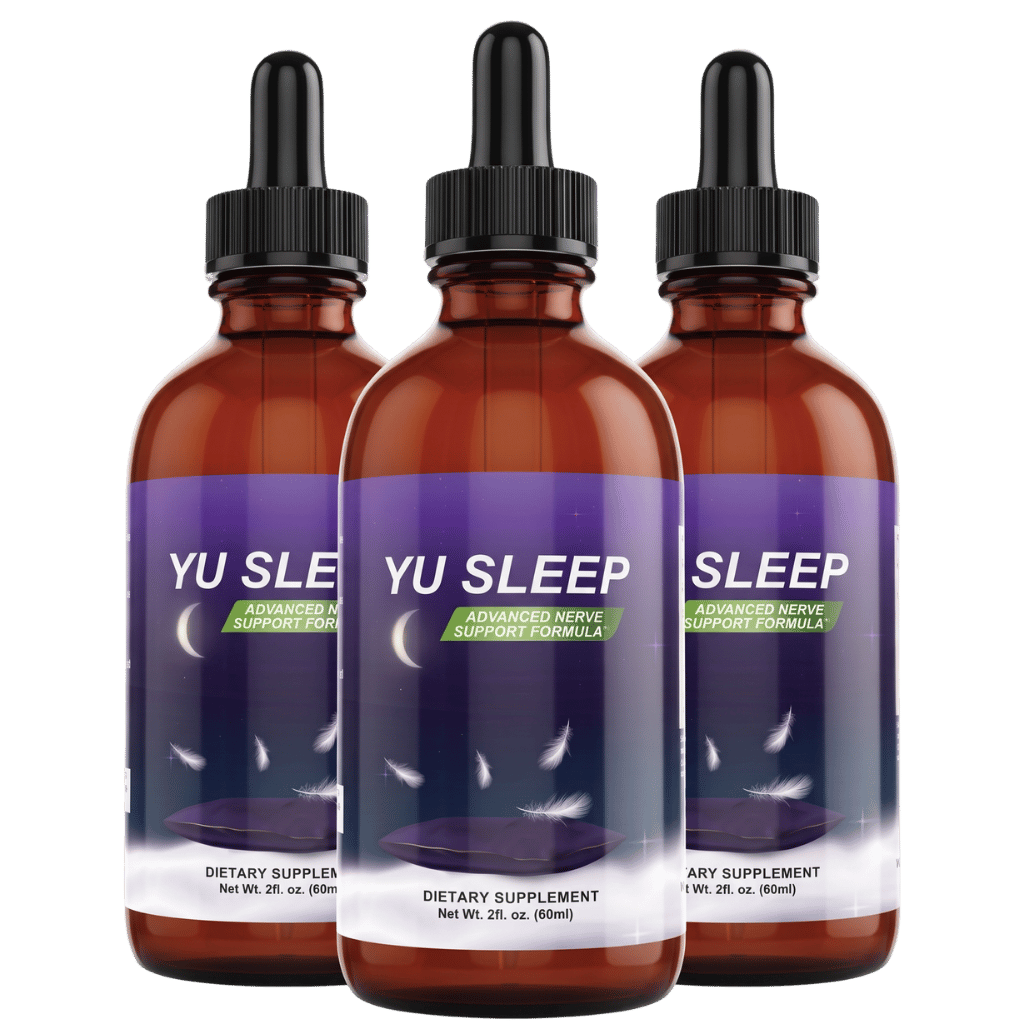
YU Sleep contains ten listed formula components per 2 mL serving: 0.9 mg melatonin, 0.5 mg vitamin B2, 0.5 mg vitamin B6, and a 637 mg proprietary blend of red tart cherry juice concentrate, magnesium glycinate, apigenin, lemon balm extract, 5-HTP, L-theanine and GABA. The melatonin and vitamin quantities are individually stated; the seven blend ingredients share one combined weight, with no separate doses disclosed.
That distinction makes YU Sleep easier to evaluate than a vague “nighttime blend,” but not as transparent as seven individually dosed supplements. You can see exactly how much melatonin is present. You cannot tell whether any one botanical or amino acid matches the amount used in a sleep study.
The product’s practical appeal is different from a clinical guarantee. Two full droppers, about 30 minutes before bed, bring several familiar nighttime ingredients into one repeatable ritual. If a liquid routine suits you, the convenience is real. The effectiveness of the finished combination, however, has not been established by an independent finished-product trial in the source set PRM reviewed.
Amounts come from the Supplement Facts image documented in PRM’s YU Sleep Research Dossier, originally checked August 6, 2026. Recheck the label on the actual bottle before using it; this is a label-based analysis, not an independent laboratory assay.
First, read what the bottle actually tells you
What does the YU Sleep Supplement Facts panel disclose?
Four lines carry the measurable formula information: vitamin B2, vitamin B6, melatonin and the total proprietary blend. The reviewed bottle specifies a 2 mL serving, equivalent to two full droppers, and approximately 30 servings per bottle.
| Label component | Amount per 2 mL | What you can conclude | What remains unknown |
|---|---|---|---|
| Melatonin | 0.9 mg | A defined melatonin dose can be evaluated independently. | Whether this full formula produces a particular sleep outcome. |
| Vitamin B2 (riboflavin 5-phosphate) | 0.5 mg | The form and quantity are disclosed. | Any sleep improvement attributable to this 0.5 mg amount. |
| Vitamin B6 (pyridoxal 5-phosphate) | 0.5 mg | The form and quantity are disclosed. | Any sleep improvement attributable to this 0.5 mg amount. |
| Nighttime proprietary blend | 637 mg total | Seven named ingredients together weigh 637 mg per serving. | The individual amount of each ingredient and the elemental-magnesium quantity. |
| Serving instructions | 2 mL / two full droppers | Approximately 30 servings in the reviewed bottle. | A guaranteed response time or sleep result. |
This is the most important distinction to take into your purchase decision: “637 mg” does not mean 637 mg of magnesium, GABA, L-theanine or any one ingredient. It is the combined weight of all seven. It also does not tell you the amount of elemental magnesium.
The clearest measurable nighttime ingredient
Why does YU Sleep contain 0.9 mg of melatonin?
Melatonin is a hormone involved in the body’s circadian timing, and YU Sleep declares 0.9 mg separately from its blend. That makes it the formula’s easiest sleep-oriented component to assess. It is also different from products that obscure their melatonin quantity inside a shared blend.
For someone who already thinks of bedtime as a transition that should have a clear beginning, a stated dose provides a concrete piece of information. You know what is listed in the serving rather than having to guess. But “measured” is not a synonym for “proven to help everyone.” Federal guidance says melatonin may help in particular circadian situations while evidence for chronic insomnia and other sleep outcomes is inconsistent. Timing, individual circumstances and the reason for poor sleep all matter.
What strengthens confidence
A visible number, not a mystery dose
The 0.9 mg amount is independently readable on the reviewed Supplement Facts panel. You can discuss that number with a clinician and compare it with other labeled melatonin products without guessing how much the blend contains.
What the number does not promise
Not an automatic solution for chronic insomnia
Melatonin research does not establish that YU Sleep will stop nighttime awakenings, restore deep sleep or treat a diagnosed sleep disorder. Long-term supplemental melatonin safety is also less well characterized than short-term use.
Independent context: NCCIH — Melatonin: What You Need To Know · NCCIH — Sleep Disorders and Complementary Health Approaches.
One blend, seven named components
Which seven ingredients make up YU Sleep’s 637 mg proprietary blend?
The blend combines tart cherry, magnesium glycinate, apigenin, lemon balm extract, 5-HTP, L-theanine and GABA. Together, they explain the product’s broader sleep-support positioning beyond melatonin alone. Their individual weights are not declared.
01 / Fruit-derived
Red tart cherry juice concentrate
Tart cherry is relevant because some human studies have investigated sleep outcomes and melatonin-related measures using defined quantities of cherry juice or concentrate. The concentration and individual amount supplied by YU Sleep cannot be recovered from its blend total.
Buyer takeaway: a researched ingredient family, but not a direct match to the studied servings.
02 / Mineral form
Magnesium glycinate
Magnesium is involved in normal nerve and muscle function. A trial of magnesium bisglycinate investigated a measured 250 mg of elemental magnesium daily and reported a modest improvement in insomnia-severity scores. YU Sleep does not identify its elemental-magnesium dose.
Buyer takeaway: the form is identifiable, but the dose cannot be compared with that trial.
03 / Plant compound
Apigenin
Apigenin is a plant flavonoid often associated with chamomile and relaxation-oriented supplement formulas. YU Sleep lists it by name, but not its weight or the study-equivalent amount. It is more accurate to view it as one part of the blend’s intended character than as a guaranteed sedative.
Buyer takeaway: identifiable inclusion; independent dose-specific sleep benefit for this product unestablished.
04 / Botanical extract
Lemon balm (Melissa officinalis)
Lemon balm has a traditional calming reputation and appears in clinical studies of multi-ingredient supplements. The specific study PRM reviewed combined it with L-theanine, valerian and saffron and did not outperform placebo on its reported sleep measures. It was not the YU Sleep formula.
Buyer takeaway: study context exists, but the outcomes should not be transferred to this blend.
05 / Serotonin-related precursor
5-HTP from Griffonia seed extract
5-HTP is a precursor involved in serotonin pathways, which is why it is marketed in some nighttime products. Evidence for insomnia benefit is limited. Because it may interact with serotonergic medicines, including some antidepressants, medication review matters more than promotional claims of “natural relaxation.”
Buyer takeaway: a meaningful ingredient to identify before use, especially if you take medicines affecting serotonin.
06 / Tea-derived amino acid
L-theanine
L-theanine has been studied in relaxation and sleep-related settings, including in combinations with other ingredients. It contributes to the formula’s positioning around winding down, but the undisclosed amount prevents a direct comparison with human study doses.
Buyer takeaway: an intelligible addition to a bedtime blend, not confirmed proof that YU Sleep improves sleep.
07 / Neurotransmitter-related
GABA
GABA is an inhibitory neurotransmitter in the nervous system; oral GABA products have been explored for sleep and relaxation. An exploratory 2026 study examined GABA plus L-theanine at stated doses, but it was single-arm and not a trial of YU Sleep. The blend’s GABA quantity is unknown.
Buyer takeaway: presence is confirmed by the label; magnitude of benefit cannot be inferred.
The seven-ingredient perspective: YU Sleep saves the buyer from assembling seven separately purchased ingredients into a nightly plan. That convenience is its clearest practical advantage. But more listed components do not necessarily mean stronger or faster effects, especially when all seven doses are undisclosed.
Every ingredient, without omissions
What is the complete YU Sleep ingredient list, including vitamins and other ingredients?
The reviewed label contains three separately stated dietary components, a seven-part proprietary blend and an additional list of liquid-formulation ingredients. Those categories should not be confused with one another.
| Category | What is listed | Quantity status |
|---|---|---|
| Individually disclosed | Vitamin B2 (riboflavin 5-phosphate); vitamin B6 (pyridoxal 5-phosphate); melatonin | 0.5 mg; 0.5 mg; 0.9 mg respectively |
| Proprietary blend, in label order | Red tart cherry juice concentrate; magnesium glycinate; apigenin; lemon balm extract; 5-HTP (Griffonia seed extract); L-theanine; GABA | 637 mg combined; individual amounts not supplied |
| Other ingredients | Distilled water; glycerin; medium invert syrup; citric acid; erythritol; sodium citrate dihydrate; natural flavors; gum arabic; xanthan gum; potassium sorbate | No individual amounts stated in the reviewed list |
The “other ingredients” list is relevant to people checking flavorings, sweeteners and excipients, but those entries should not be recast as the ten primary sleep-oriented formula components. Use the package you receive as the controlling label if any ingredient details have changed.
A surprisingly important transparency difference
Is YU Sleep’s 637 mg proprietary blend a problem?
It is a material limitation for comparing evidence, not proof that the formula is ineffective or unsafe. The combined weight tells you something real about the preparation. What it cannot tell you is whether YU Sleep contains the 250 mg elemental magnesium used in one trial, the quantity of tart cherry juice used in another, or any particular dose of GABA, 5-HTP or L-theanine.
Imagine comparing two products: one lists 100 mg of an ingredient, while the other includes it among seven ingredients totaling 637 mg. Both may contain that ingredient. Only the first lets you compare that particular dose with a dose-specific research paper.
What makes YU Sleep distinct is the split: a transparent melatonin amount in front of a less transparent supporting blend. That makes the product a reasonable candidate for buyers seeking a simple liquid routine, but a poor choice for someone who requires every ingredient amount before purchase.
Research without borrowed certainty
Do scientific studies support the YU Sleep ingredients?
Several ingredients have relevant human research, but that research does not establish that the finished YU Sleep formula delivers the same outcomes. The studies use different preparations, disclosed amounts and participant groups. Most corresponding YU Sleep doses cannot be matched because the blend amounts are undisclosed.
| Ingredient or combination | What independent research found | Why it does not prove the YU Sleep result |
|---|---|---|
| Melatonin | Federal health guidance recognizes its circadian role; evidence varies by sleep condition. | A measured 0.9 mg dose does not prove this complete multi-ingredient product treats insomnia or nighttime awakening. |
| Tart cherry juice | Small crossover studies investigated sleep outcomes using defined juice exposures; one eight-person completed trial used 240 mL twice daily. | The amount and preparation of tart cherry in 2 mL of YU Sleep are not disclosed or equivalent to the trial juice. |
| Magnesium bisglycinate | A 155-person randomized trial reported a small reduction in insomnia-severity scores using 250 mg of elemental magnesium daily. | The formula doesn’t reveal its elemental-magnesium amount; the comparison cannot establish matching dosage. |
| L-theanine + lemon balm combination | A placebo-controlled study of a different four-ingredient formula reported no significant sleep advantage over placebo. | Different formula and unknown YU Sleep doses; neither success nor failure can be transferred directly. |
| GABA + L-theanine combination | An exploratory study used specified amounts in 19 participants without a placebo control group. | Its design limits causal conclusions and YU Sleep’s corresponding doses are unknown. |
These findings help explain the logic behind the ingredient selection: a circadian-timing component surrounded by several ingredients associated with relaxation or sleep research. That is useful context when you are deciding whether the blend makes sense to you. It is not evidence that the formula will deliver deeper sleep, fewer awakenings or improved next-day energy in any particular person.
Selected independent research: NCCIH sleep guidance · tart cherry crossover study (PMID 22038497) · tart cherry pilot (PMID 28901958) · magnesium bisglycinate trial (PMID 40918053) · multi-ingredient sleep trial (PMID 38580720) · GABA/L-theanine exploratory study (PMID 41636292).
The role of the two B vitamins
Why are vitamins B2 and B6 included in YU Sleep?
The reviewed formula separately lists 0.5 mg of riboflavin 5-phosphate (B2) and 0.5 mg of pyridoxal 5-phosphate (B6). These are identifiable coenzyme-related vitamin forms. B vitamins participate in normal metabolism and nervous-system processes; their inclusion is not evidence that either stated amount independently treats poor sleep.
It would also be misleading to assume that because B6 participates in biochemical pathways related to neurotransmitters, the finished liquid necessarily increases melatonin or serotonin in the user. The label confirms presence and amount—not that physiological result.
What the bottle asks of you
How do you use YU Sleep’s two-dropper liquid serving?
The reviewed directions call for two full droppers (2 mL) approximately 30 minutes before bed. The bottle lists about 30 servings at that serving size. That makes the routine straightforward to understand: one measured step rather than a set of separate pills and powders.
Format
Liquid, not capsules
For someone who prefers avoiding capsules at night, a dropper-format supplement can be easier to fit into an existing evening habit. Convenience is a personal preference, not clinical evidence of faster absorption or stronger effects.
Timing
A defined pre-bedtime moment
The approximately 30-minute instruction gives the ritual a clear place in the evening. Follow the directions on the current label rather than increasing the amount to chase a stronger result.
Quantity
About 30 servings per bottle
At one labeled serving each night, the stated count corresponds to roughly one month’s supply. Actual use and package contents should be checked on the bottle received.
The moment the formula is meant to fit
Some evenings need one less decision—not another complicated routine.
It’s late. The kitchen is finally quiet. Your phone is charging, but tomorrow is already running through your head: a message you forgot to send, a conversation that didn’t go as planned, a list that never seems to get shorter.
You could spend that moment lining up several supplements and comparing instructions. Or you might prefer one familiar action that marks the end of the day. That is the more personal appeal of YU Sleep’s formula: melatonin and seven supporting ingredients gathered into a two-dropper step you can understand and repeat.
There’s value in simplicity when you’re tired. But simplicity only becomes confidence when you also understand what’s inside. Here, the melatonin amount is clear; the individual blend doses are not. Knowing both facts lets you choose for the right reason—not because a long ingredient list promised a perfect night.
A sensible ingredient-fit decision
Who is YU Sleep’s formula best suited for?
YU Sleep may be worth comparing for adults seeking a prepared liquid bedtime routine with a disclosed melatonin dose, provided the multi-ingredient profile and dosing transparency meet their needs. It is less suitable as a blind purchase for someone who requires precise doses of every component or needs treatment for a diagnosed sleep disorder.
A qualified reason to compare
You value a defined, simple nighttime ritual
- You prefer a liquid serving over several separate capsules or products.
- You want the melatonin amount clearly identified on the label.
- You’re comfortable with a seven-ingredient blend whose individual doses aren’t listed.
- You’ve checked ingredients for personal suitability and understand that no result is guaranteed.
- You can evaluate the present offer without relying on exaggerated sleep promises.
A reason to pause first
You need dose precision or medical guidance
- You need known amounts of magnesium, 5-HTP, GABA, L-theanine or other blend ingredients.
- You take antidepressants or other medicines affecting serotonin and haven’t reviewed 5-HTP with a clinician.
- You are pregnant, breastfeeding, a minor, or have a medical condition or persistent sleep symptoms.
- You expect a proven cure for chronic insomnia, sleep apnea or frequent night waking.
- You’re uncomfortable with uncertainty about long-term melatonin use or the complete formula.
Safety context: NCCIH melatonin guidance · Memorial Sloan Kettering — 5-HTP and medicine interactions. See also our YU Sleep Research Dossier for the longer evidence discussion.
From an ingredient list to an informed choice
One measured melatonin dose, seven supporting ingredients, one bedtime step. Does that fit you?
You have the important facts: 0.9 mg melatonin is disclosed, the supporting blend totals 637 mg without individual amounts, and the labeled serving is two droppers. The practical advantage is convenience. The honest trade-off is less precision about the rest of the formula.
If that is the kind of supplement you were looking for—and its ingredients are appropriate for you—compare the current YU Sleep offer and check the exact package, seller and total at the destination. A longer package should be chosen because you genuinely want the routine, not because you expect a guaranteed sleep result.
A final check before committing
What should you verify on a current YU Sleep bottle and checkout?
The next useful step is to make sure the product being sold matches the formula you just evaluated. The original PRM label and transaction observations were recorded in August 2026; packaging, prices and terms can change.
01 / Supplement Facts
Confirm the 2 mL serving and 0.9 mg melatonin
Look for the current amounts of B2, B6 and melatonin. If the label differs materially, use that bottle’s label rather than the older research snapshot.
02 / Blend and other ingredients
Check all seven components
Confirm the 637 mg blend, its complete ingredient list, and any excipients or sweeteners relevant to you. Do not assume an undisclosed dose equals a study dose.
03 / Seller and total
Read the actual checkout summary
Verify package quantity, shipping, one-time billing or any optional additions. The archived Review’s price table is a historical comparison, not proof of today’s charge.
04 / Return terms
Know the conditions before buying
The previously reviewed offer advertised a 60-day money-back period. Check the current seller and retailer’s terms, start date and physical-return requirements at checkout.
Our ingredient conclusion
Are YU Sleep’s ingredients worth considering?
Yes, for an appropriately informed buyer who values the convenience of a two-dropper liquid routine and accepts the formula’s transparency limits. YU Sleep’s most concrete strength is its individually disclosed 0.9 mg melatonin amount; its broader appeal is the seven named complementary ingredients combined in one preparation. That is a coherent product proposition without claiming the full formula is clinically proven.
The main reason to hesitate is just as specific: 637 mg across seven ingredients tells you less than individually labeled amounts would. Research on tart cherry, magnesium or L-theanine is useful for context, but it cannot certify this product’s exact dose or result. And 5-HTP plus melatonin means suitability matters, especially when medications or persistent sleep problems are involved.
Frequently asked questions
YU Sleep ingredients: questions buyers ask most
What are the ten main ingredients in YU Sleep?
Based on the Supplement Facts image documented by PRM, the ten components are vitamin B2, vitamin B6, melatonin, red tart cherry juice concentrate, magnesium glycinate, apigenin, lemon balm extract, 5-HTP, L-theanine and GABA. Three are individually quantified; seven share a proprietary blend.
How much melatonin does YU Sleep contain?
The reviewed label states 0.9 mg of melatonin per 2 mL serving. Check the printed label on your current bottle for any update.
How much magnesium glycinate is in YU Sleep?
The individual magnesium-glycinate amount is not disclosed. It is one of seven ingredients in a 637 mg proprietary blend. That total is not the dose of magnesium glycinate or elemental magnesium.
What does the 637 mg proprietary blend mean?
It means seven listed components together contribute 637 mg per serving. The label does not reveal the individual quantity of tart cherry, magnesium glycinate, apigenin, lemon balm, 5-HTP, L-theanine or GABA.
Is melatonin included inside the proprietary blend?
The reviewed Supplement Facts panel lists 0.9 mg melatonin separately from the 637 mg blend. Red tart cherry is included inside the blend, but the label does not establish that the separately listed melatonin came from the cherry ingredient.
How much L-theanine and GABA does each serving provide?
The two ingredients are named in the blend, but their individual milligram quantities are not disclosed. Human studies using stated GABA or L-theanine doses cannot be matched directly to YU Sleep.
Does YU Sleep contain 5-HTP?
Yes. The reviewed label lists 5-HTP from Griffonia seed extract among the seven blend ingredients. Its individual amount is undisclosed. People taking serotonergic medicines should discuss 5-HTP with a qualified clinician before use.
Does YU Sleep contain vitamin B12?
The Supplement Facts panel reviewed by PRM identifies vitamins B2 and B6, not a separately quantified B12 line. Some promotional descriptions on the wider web mention B12; the physical label reviewed by PRM is the controlling evidence for this Guide.
What forms of vitamins B2 and B6 are used?
The reviewed label lists riboflavin 5-phosphate for vitamin B2 and pyridoxal 5-phosphate for vitamin B6, both at 0.5 mg per serving. Their inclusion does not establish an independent sleep benefit at those doses.
Is YU Sleep a capsule or a liquid supplement?
It is a liquid dietary supplement. The reviewed instructions specify a 2 mL serving equal to two full droppers, approximately 30 minutes before bedtime.
How many servings are in one bottle?
The reviewed product panel states approximately 30 servings per bottle. At the labeled one-serving-per-night use, that corresponds to roughly 30 nights. Actual packaging should be checked for changes.
Can YU Sleep ingredients guarantee deep sleep or prevent waking at 3 AM?
No. The source set reviewed by PRM did not identify a finished-product clinical trial establishing those outcomes. Melatonin and some blend ingredients have related research, but their presence does not guarantee a particular sleep result.
Does YU Sleep have any fillers, flavors or sweeteners?
The reviewed other-ingredients list includes distilled water, glycerin, medium invert syrup, citric acid, erythritol, sodium citrate dihydrate, natural flavors, gum arabic, xanthan gum and potassium sorbate. Check the current package if these are relevant to you.
Are the YU Sleep ingredients clinically tested as one formula?
No independent randomized clinical trial of the complete YU Sleep formula was identified in the sources PRM reviewed. Some individual components or other combinations have been studied, but that is not the same as a finished-product trial.
Can I take YU Sleep with antidepressants or other medication?
Do not assume compatibility. The formula contains 5-HTP, which has potential interactions with serotonergic medications, and melatonin may interact with other drugs. Ask your pharmacist or qualified healthcare professional before combining supplements with prescription medicines.
Is YU Sleep suitable for someone with chronic insomnia?
It should not replace assessment or treatment for persistent insomnia or another sleep disorder. Federal guidance does not establish melatonin supplements as effective treatment for chronic insomnia, and YU Sleep has not been established as a clinical treatment.
Where can I compare the formula with the actual YU Sleep offer?
Read the full YU Sleep Review and Research Dossier, then use the current-offer comparison link in this Guide to confirm the bottle count, label and purchase terms. That link does not preselect a package.
How we evaluated this formula
YU Sleep ingredient methodology and independent sources
Pro Review Metric used the Supplement Facts image and bottle directions documented in its YU Sleep Research Dossier (original source check August 6, 2026) as the primary basis for product-specific ingredient names, forms, amounts, 2 mL serving size and approximately 30 servings per bottle. We cross-checked that record with the published YU Sleep Review. This analysis does not claim that PRM independently tested a purchased bottle, measured ingredients in a laboratory or verified the product’s clinical performance.
The dose of 0.9 mg melatonin is separately disclosed, as are 0.5 mg each of vitamins B2 and B6. The seven additional ingredients share one 637 mg proprietary blend. Their individual doses cannot be calculated from the combined amount. Studies using different preparations, amounts or participant groups are therefore presented as ingredient context only, not evidence that YU Sleep itself provides equivalent effects. No finished-product clinical trial was identified in the consulted source set; that is not a claim that no such study could exist elsewhere.
Current seller-facing pages can contain inconsistent promotional wording, so we did not substitute a promotional ingredient list for the reviewed Supplement Facts panel. The offer and checkout observed in August 2026 are historical transaction evidence; today’s prices, retailer, shipping and refund conditions were not independently reverified for this Ingredients Guide. Users should confirm the current label and checkout terms before purchase.
PRM sources: YU Sleep Research Dossier, label and evidence record · YU Sleep Review. Federal guidance: NCCIH — Melatonin · NCCIH — Sleep disorders. Medication interactions: MSKCC — 5-HTP.
Human research: tart cherry (PMID 22038497) · tart cherry pilot (PMID 28901958) · magnesium bisglycinate (PMID 40918053) · L-theanine/lemon balm combination (PMID 38580720) · GABA/L-theanine exploratory study (PMID 41636292).