Disclosure: We may earn a commission if you purchase through links on this page, at no additional cost to you. Our editorial conclusions are developed independently.
A simple oral-care step deserves a clear safety answer
Does ProDentim have side effects?
ProDentim could cause unwanted effects, although reliable rates of side effects from the finished ProDentim tablet have not been established in the evidence PRM reviewed. For generally healthy adults, probiotic supplements are usually well tolerated; temporary gas or digestive discomfort is possible. People with weakened immune defenses, serious illness, relevant allergies or other medical concerns need more individualized advice before using a live-microorganism product.
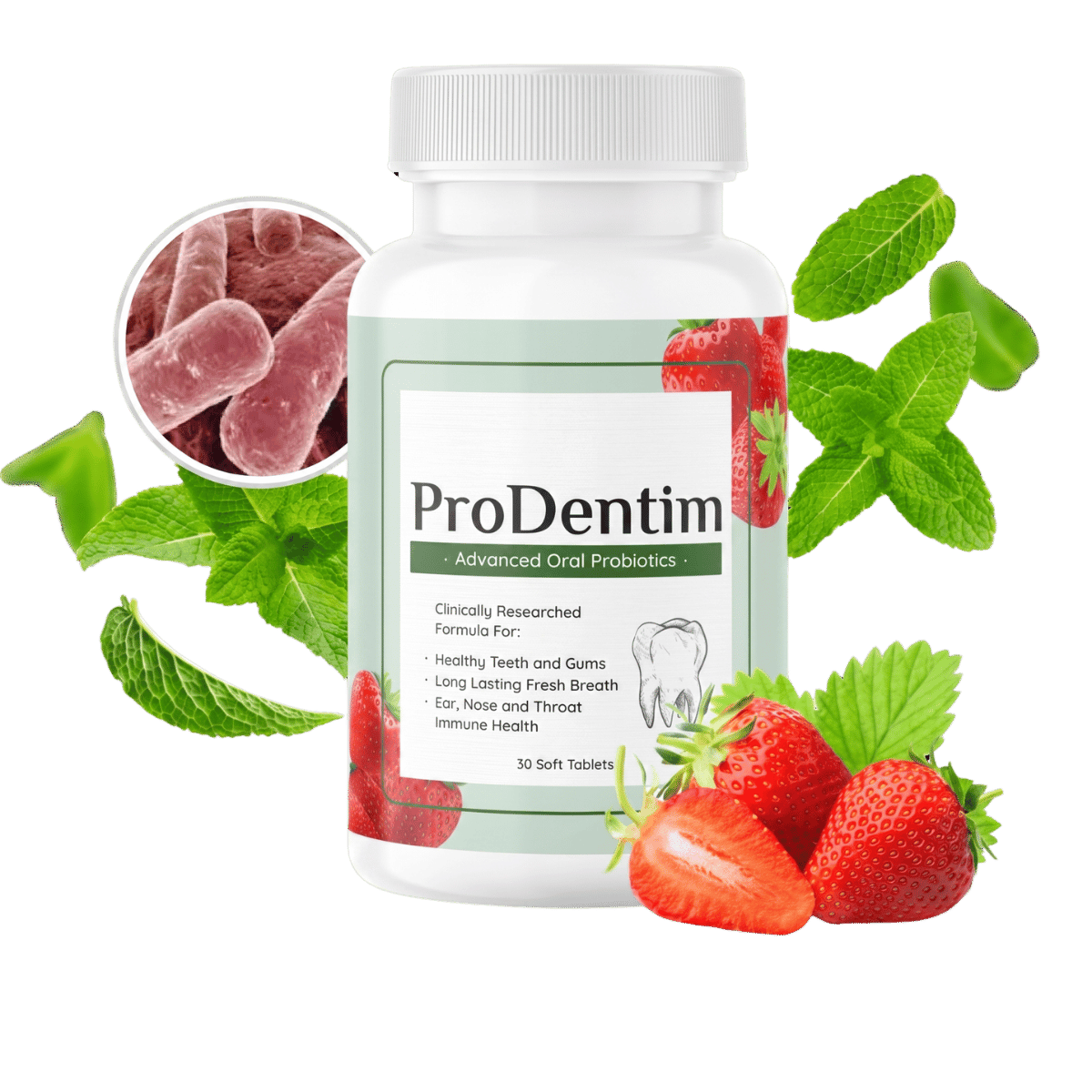
What makes ProDentim appealing is also what makes the safety question worth asking. It is not another rinse to add after brushing. It is a strawberry-flavored tablet designed to dissolve in the mouth, bringing multiple probiotic organisms and chicory-root inulin into a familiar daily routine.
For many buyers, that convenience is the attraction: one small step, without replacing the oral care they already practice. But deciding whether to add it should feel reassuring—not like guessing how your body might react.
The useful distinction: public health guidance tells us about probiotics in general. The ProDentim label tells us which organisms and other ingredients are listed. Neither source, on its own, gives a proven percentage of ProDentim buyers who experience an upset stomach, an allergic response or no symptoms at all.
Source boundary: the formula and directions reflect PRM’s photographed label documented August 6, 2026. The safety evidence discussed here comes primarily from NIH ODS, NCCIH and published probiotic literature reviewed November 6, 2026, not a completed ProDentim-specific adverse-event trial. See the ProDentim Research Dossier.
First separate common possibilities from documented product outcomes
What side effects might ProDentim users notice?
The most plausible mild effects are temporary digestive symptoms associated with probiotics, such as gas or bloating, and individual sensitivity to a listed ingredient. These are possibilities based on ingredient categories and published general evidence—not a verified list of reactions reported at measured rates in a clinical trial of ProDentim.
| Concern | Evidence-based context | What this means for ProDentim | Practical response |
|---|---|---|---|
| Gas or bloating | Usually mild gastrointestinal complaints can occur with probiotic use; inulin in larger studied amounts may also increase gas. | Plausible, but frequency, severity and attribution to this tablet are not established. | Watch whether symptoms begin after use; stop and seek advice if troublesome or persistent. |
| Flavor or ingredient sensitivity | People can have individual reactions to flavoring ingredients or other formulation components. | Natural strawberry flavor and peppermint essential oil are listed; no product-specific allergy rate is available. | Check the current complete label before use, particularly with known allergies or oral sensitivity. |
| Serious infection in vulnerable users | Rare serious infections have been documented with some probiotic organisms, particularly in severely ill or immunocompromised people. | A population-level caution; it is not a documented ProDentim infection rate or proof its organisms caused such cases. | Seek clinician clearance rather than experimenting independently if medically vulnerable. |
| Drug or treatment questions | Interactions depend on the actual treatment. Antibiotics may reduce viability of susceptible bacteria; immune-suppressing treatment changes safety considerations. | Specific product-drug interactions were not validated by a dedicated clinical study. | Ask a pharmacist or prescribing clinician about your exact medications and schedule. |
NIH guidance notes that probiotics generally cause few problems for healthy people but also emphasizes that product formulations differ and long-term safety evidence is not uniform. NIH ODS consumer guidance and NCCIH’s review support a proportionate approach: neither alarmism nor a blanket assurance.
What is in the specific product matters
Which ProDentim ingredients matter most for safety?
ProDentim’s safety profile has to be assessed from the actual label: a shared probiotic blend, separately listed Streptococcus salivarius, 100 mg of inulin and several tablet or flavor ingredients. The most important unknown is not whether these names sound familiar, but whether any of them poses a problem for your medical context.
Live microorganisms
Three-species probiotic blend
The 20 mg blend contains L. paracasei, L. reuteri and B. lactis Bl-04®. It declares 3.5 billion CFU at manufacture, shared among the three. General tolerance information is reassuring for many healthy adults, but individual organism counts and clinical safety data for this exact combination are unavailable in the record.
Separate probiotic entry
Streptococcus salivarius
The reviewed panel lists 20 mg of S. salivarius outside the blend, without a K12/M18 designation or a separate CFU count. Safety observations involving a named study strain cannot automatically be applied to an unidentified strain in ProDentim.
Measured prebiotic
Chicory-root inulin
The labeled 100 mg is 0.1 gram. Inulin can be associated with digestive fermentation and gas at substantially larger studied amounts, but those gram-level findings do not predict reactions to the 100 mg quantity in this product.
Other ingredients
Flavor and tablet materials
The reviewed panel names natural strawberry flavor, peppermint essential oil, tricalcium phosphate and microcrystalline cellulose. These help describe the product’s composition and sensory format; their individual quantities and ProDentim-specific intolerance rates are not disclosed.
That information gives a buyer a concrete checklist, not a diagnosis. For more detail about the formula itself, the ProDentim Research Dossier examines the label and identifies which strains and quantities can actually be matched to research. This Side Effects Guide stays focused on suitability and practical safety decisions.
The everyday question most buyers have
Can ProDentim cause gas, bloating or stomach discomfort?
It is possible, but the published general evidence does not establish how often ProDentim itself causes these symptoms. NIH ODS reports that the side effects of many probiotic supplements, when they occur in healthy people, are usually minor and may include gas. A new supplement can also coincide with ordinary diet-related digestive changes, so timing alone is not proof of the cause.
The product also contains chicory-root inulin. A controlled study of inulin tolerance examined quantities measured in grams and found that some forms produced mild gas or bloating at studied amounts. ProDentim’s reviewed label states 100 mg (0.1 g) per tablet. The larger-dose results should not be used to claim that this smaller amount will cause the same symptoms—or that it cannot cause any symptoms in a sensitive person. Read the inulin tolerance study.
A real safety distinction, without inflating the risk
Can the probiotic strains in ProDentim cause an infection?
Probiotic-associated infection is unusual in healthy people, but serious infections involving some probiotic organisms have been described in medically vulnerable populations. NIH ODS highlights heightened concern among people who are severely ill or immunocompromised. Those reports do not establish that the finished ProDentim tablet caused the events or quantify its risk.
A 2023 review of Lactobacillus bacteremia discusses how severe underlying disease, immune suppression and central venous catheters can change the risk picture. It also stresses that linking a blood isolate to a consumed probiotic requires strain-level investigation; finding the same genus in both places is not enough. Review the bacteremia literature.
Generally healthy adults
Look at tolerance and fit
For most people in this group, general probiotic guidance is broadly reassuring. That does not replace a check of allergies, the full label or any unusual symptom after starting a new supplement.
Medical vulnerability
Do not self-clear a live-microbe product
Immune suppression, serious illness, intensive treatment or a central venous catheter should move the decision to the treating clinician. The correct question is whether this specific product is suitable in that context.
Perspective matters: using rare serious cases to frighten every healthy buyer would be misleading; ignoring them when advising medically vulnerable people would also be misleading. The safest purchase is the one made with an honest understanding of which group you belong to.
If your mouth is sensitive, the ingredient list matters too
Could ProDentim cause an allergic reaction or mouth irritation?
Individual sensitivity is possible with any flavored oral product. The reviewed ProDentim label includes natural strawberry flavor and peppermint essential oil among other ingredients, but PRM did not find controlled evidence establishing how often this tablet causes mouth irritation or an allergic reaction.
If you already know that peppermint, a flavoring or another listed ingredient triggers symptoms for you, do not assume a small, dissolving tablet is exempt. Review the actual bottle or discuss alternatives with a clinician. That advice is based on personal sensitivity, not a claim that peppermint is a common ProDentim hazard.
Stop use if a repeatable reaction occurs. Hives accompanied by breathing difficulty, throat or tongue swelling, faintness or other signs of a severe allergic reaction require immediate emergency care. A persistent mouth sore, burning or swelling deserves assessment by a healthcare or dental professional rather than repeated exposure to see whether it goes away.
Medication questions deserve precision
Does ProDentim interact with antibiotics or other medicines?
Specific clinical drug-interaction rates have not been established for ProDentim. Antibiotics may reduce the effectiveness of susceptible bacterial probiotics, while serious illness or therapies that suppress immune defenses can change whether a live-microorganism supplement is suitable at all. These are different issues and should not be collapsed into “ProDentim interacts with all medications.”
| Situation | Why it deserves attention | Buyer action |
|---|---|---|
| Antibiotic treatment | An antibiotic can affect bacteria, including some probiotic organisms; the clinical importance depends on the drug, strain and schedule. | Ask the prescriber or pharmacist whether a probiotic is appropriate and whether timing matters. Do not change the antibiotic plan yourself. |
| Immunosuppressive treatment | Weakening immune defenses can elevate concerns about exposure to live microorganisms. | Obtain advice from the treating clinician before use; do not rely on general “natural” or “all ages” sales language. |
| Multiple prescriptions or complex care | The exact conditions and treatment goals matter more than a generic online interaction list. | Bring the full label and medication list to a clinician or pharmacist for a personalized check. |
| No regular medicines, generally healthy | Medication interactions may not be a leading concern, but allergy, tolerance and label consistency still matter. | Follow the current package directions and seek advice if an unexpected problem develops. |
NIH’s immune-function supplement review notes that probiotics are not generally known for conventional medication interactions, while antibiotics and antifungals may affect probiotic organisms. That is not permission to ignore the context of prescribed immunosuppressive therapy, transplantation or serious illness.
Not every person should make the same buying decision
Who should consult a clinician before taking ProDentim?
Seek professional guidance before use if you are pregnant or nursing, immunocompromised, seriously ill, managing an important medical condition, receiving major medical treatment, or taking medications whose context could affect safety. A history of allergies or reactions to oral supplements also warrants a closer look. For children, do not extrapolate an adult marketing message to unsupervised use.
Pregnancy or nursing
Ask about the specific product
General probiotic studies do not automatically establish safety of this exact formula, strain mix, flavoring and use pattern during pregnancy or lactation. Check with the appropriate clinician.
Compromised immunity
Prioritize medical clearance
If your immune system is suppressed by illness or treatment, the general risk discussion changes. The clinical team managing your condition should decide whether a probiotic is appropriate.
Oral symptoms or dental disease
Do not delay diagnosis
Persistent gum bleeding, tooth pain, swelling, fever or signs of infection need appropriate dental or medical evaluation. ProDentim is not a substitute for treatment.
Known allergies or sensitivity
Read the full ingredient panel
Confirm the actual bottle’s flavorings and other ingredients. Individual reactivity matters even when a product is marketed as simple or natural.
The seller’s published support page broadly describes the product as suitable for all ages and medical conditions. That is a seller assertion, not independently established finished-product safety evidence. The same seller website advises pregnant or nursing people, medication users and people with medical conditions to consult a physician. PRM follows the more careful, individualized approach rather than presenting universal clearance. See the seller’s FAQ and warnings.
The format should make your routine easier—not more confusing
Is ProDentim safe to use every day?
Daily use is part of the reviewed product directions, but daily-use instructions are not proof of long-term safety for every person. PRM’s August 2026 label record describes one soft tablet once or up to twice daily, ideally after brushing or mouthwash, left to dissolve completely. It does not provide a finished-product long-term adverse-event study.
The practical appeal is clear: if you already have a stable brushing routine, a dissolving tablet can be attached to that moment. For an appropriate buyer, that ease may make the decision feel manageable. But there is no clinical justification here for increasing the frequency to force a result.
The current bottle’s directions control over a promotional description or an archived label. If you experience discomfort, or if a clinician advises against probiotic use, do not continue merely to finish a purchased supply. Daily use only makes sense while the product remains suitable for you.
Know when the issue is not about the supplement
What if symptoms begin while you are taking ProDentim?
Do not automatically attribute every new symptom to ProDentim—or dismiss it because the product is a supplement. If gas, irritation or another new complaint begins after use, record the timing, stop use when a reaction is suspected and consult an appropriate professional if symptoms persist or concern you. Avoid repeating doses to “test” a potentially serious reaction without advice.
Some warning signs require care independently of any supplement: worsening toothache, painful swelling, gum abscess, fever, difficulty swallowing, uncontrolled bleeding or signs of infection. They are not problems to manage with a probiotic tablet instead of a dental evaluation.
For a possible severe allergic reaction—such as breathing difficulty, throat swelling or fainting—seek immediate emergency assistance. For new fever or serious illness in someone immunocompromised who has been taking probiotics, obtain prompt medical assessment and tell the clinician which product was used.
Peace of mind belongs in the decision too
Your oral-care routine should feel reassuring—not like another worry.
You may already spend time choosing toothpaste, brushing carefully and making sure your mouth feels clean before a meeting, a photo or a close conversation. Adding one dissolving tablet can sound appealing because it asks so little of your day.
But a routine is only simple when it fits the person using it. If a new ingredient makes you uncertain because of a medication, a sensitive mouth or a health condition, that uncertainty deserves an answer—not another promise from a sales page.
Good buying confidence is knowing what you can reasonably try, what you should check first and when to leave a product on the shelf. There is room for curiosity about oral probiotics without gambling with your health or expecting a tablet to replace the basics.
A balanced decision, specific to you
Who is a reasonable safety fit for ProDentim—and who should wait?
The strongest case for considering ProDentim is a generally healthy adult who values the convenient oral-probiotic format, has no relevant ingredient sensitivity and can follow the current directions without interfering with medical care. The strongest case for waiting is a health situation where adding live microorganisms or an unfamiliar oral ingredient deserves individualized review.
Reasonable to evaluate
Consider the current offer if…
- You are a generally healthy adult seeking an optional addition to brushing and interdental cleaning, not a replacement.
- You have read the full label, including strawberry and peppermint flavoring ingredients, and have no known relevant reaction.
- You understand that minor digestive discomfort is possible and that exact ProDentim adverse-event rates are unknown.
- You do not have a medical or medication concern requiring clearance—or you have already obtained that clearance.
- The current directions, supply length and checkout commitment make sense for your situation.
Resolve this first
Pause before ordering if…
- You are immunocompromised, seriously ill, undergoing transplant-related care or receiving major immunosuppressive treatment.
- You are pregnant or nursing, considering use for a child, or managing a condition where your clinician should review the formula.
- You have known flavoring or supplement allergies, prior unusual reactions, or persistent mouth irritation.
- You need to treat gum disease, infection, significant swelling or ongoing tooth pain.
- You expect a seller’s “safe for everyone” statement to substitute for individual safety evidence.
PRM’s recommendation: when those checks are clear, ProDentim can be worth comparing as a simple additional oral-care ritual. You do not need to purchase a large supply to prove your commitment to a routine. Choose based on suitability, the actual number of tablets you would use and a checkout amount you are comfortable paying. If medical uncertainty remains, the next step is advice—not an order.
A useful decision comes before a bigger purchase
Understand the safety trade-offs. Then see whether ProDentim fits.
For a suitable adult, the attraction is straightforward: a dissolving oral-probiotic tablet that can follow existing oral care, without abandoning brushing, flossing or professional checkups. The available evidence supports an informed comparison, not a risk-free or clinically guaranteed promise.
If you have addressed the relevant safety questions, check the current label, offered packages and transaction terms. Choose a quantity you can reasonably use; the link opens the seller presentation and does not preselect a package.
A practical pre-check, not a medical clearance certificate
What should you verify before buying ProDentim?
01 / Current label
Check every ingredient and warning
Compare the offered label with your own allergy history, sensitivities, health needs and the formula documented by PRM in August 2026. Do not assume packaging can never change.
02 / Personal suitability
Resolve clinical questions first
Review pregnancy, nursing, immune conditions, medications or important dental symptoms with the appropriate professional before committing to a live-microorganism supplement.
03 / Usage plan
Follow actual bottle directions
Check the number of tablets per day and the 30-tablet bottle count. The reviewed label permits one or up to two tablets daily, but higher frequency is not proof of better outcomes.
04 / Purchase terms
Know the total commitment
Confirm merchant, actual price, shipping, available return process and the quantity you expect to use. A per-bottle discount has little value if the product is unsuitable for you.
A clear answer without pretending to know an individual outcome
Is ProDentim worth considering despite potential side effects?
Yes, for an appropriately qualified buyer, ProDentim is worth examining as an optional oral-probiotic product. The ingredient list and dissolving format give it a specific identity, and general probiotic safety guidance is reassuring for many healthy adults. That is a meaningful reason to evaluate the offer rather than dismiss the category outright.
But a finished-product safety rate has not been verified, the formula does not disclose all organism-level doses, and medical vulnerability can change the decision. Seller language about universal safety is not adequate evidence for every person. The safest conclusion is also the most commercially useful one: find out whether this product fits your health context first, then compare the current offer with realistic expectations.
Direct answers to questions buyers actually ask
ProDentim side effects and safety FAQs
Does ProDentim cause side effects?
It could. PRM did not identify a clinical adverse-event rate for the exact finished tablet. General probiotic evidence suggests that healthy adults usually tolerate these products, with gas or digestive discomfort among possible mild effects. Personal allergies and medical conditions can change the risk assessment.
What are the most common ProDentim side effects?
There is no reliable product-specific frequency ranking in the evidence reviewed, so calling any reaction “the most common ProDentim side effect” would be unsupported. At the probiotic-category level, gas and temporary gastrointestinal complaints are commonly discussed possibilities.
Can ProDentim cause bloating or gas?
Yes, it is possible. Probiotic products can cause temporary digestive symptoms. ProDentim also lists 100 mg of inulin, but findings from gram-level inulin studies do not establish a reaction rate at this dose.
Does ProDentim cause diarrhea or constipation?
Digestive changes are possible with supplements, but PRM cannot establish that diarrhea or constipation occurs at a particular rate with ProDentim. Persistent, worsening or concerning symptoms warrant stopping use and obtaining medical advice.
Can ProDentim cause a headache?
A headache developing after a new supplement does not, by itself, establish causation. PRM did not find a finished-product study measuring ProDentim-related headache frequency. Seek medical advice for persistent, severe or unusual symptoms.
Can ProDentim irritate my mouth?
Individual sensitivity to a flavored dissolving tablet is possible. The reviewed label lists natural strawberry flavor and peppermint essential oil. No reliable ProDentim-specific mouth-irritation rate was identified. Stop use and seek dental or medical advice if symptoms persist or worsen.
Does ProDentim contain an ingredient that can cause allergies?
Any individual may be sensitive to a particular ingredient. Check the complete current label, including flavoring and tablet materials, especially if you already know you react to peppermint, certain flavors or supplements. Severe breathing or swelling symptoms require emergency care.
Is ProDentim safe for people with weakened immune systems?
Do not assume so. General probiotic research raises additional concerns about infections in severely ill or immunocompromised people. That does not establish a specific ProDentim event rate, but it is a good reason to obtain treating-clinician clearance before use.
Is ProDentim safe during pregnancy or breastfeeding?
The exact finished product has not been established as safe for all pregnant or nursing people in the reviewed evidence. The seller also advises consulting a physician in these circumstances. Obtain individualized advice before taking it.
Can children take ProDentim?
Do not extend a broad marketing statement to children without professional guidance. The PRM-reviewed formula and its safety evidence do not establish a universal pediatric recommendation. Ask the child’s healthcare professional and follow the actual label.
Does ProDentim interact with antibiotics?
Antibiotics may affect some probiotic bacteria. Whether a probiotic is useful or appropriate during your antibiotic treatment depends on the drug, dose, indication and product; ask a pharmacist or prescribing clinician rather than changing the antibiotic schedule yourself.
Can I take ProDentim with other medicines?
Specific ProDentim drug-interaction rates were not established in the reviewed research. For important prescriptions, serious illness or immune-suppressing treatment, ask a clinician or pharmacist to assess the full label and medication list.
Is ProDentim safe to take daily for several months?
The reviewed directions include daily use, but PRM did not verify a long-term clinical safety study of the finished tablet. Follow the current bottle’s directions and seek advice if you have a relevant condition or develop symptoms. A seller’s suggested trial duration is not a guarantee of safety or effectiveness.
Should I take one or two ProDentim tablets per day?
The August 2026 label documented by PRM permits one tablet once or up to twice daily, ideally after oral care, but packaging may change. Follow the current bottle and professional advice; do not increase frequency merely in pursuit of faster results. At one daily tablet, a 30-tablet bottle lasts 30 days; at two daily, 15 days.
Will ProDentim replace brushing or dental care?
No. It is an optional supplement, not a treatment for dental disease and not a substitute for brushing twice daily with fluoride toothpaste, cleaning between teeth or obtaining professional dental treatment when needed.
What if I notice side effects after starting ProDentim?
Stop use if you suspect a reaction, note the symptoms and timing, and seek advice for symptoms that persist, recur or cause concern. For breathing difficulty, throat swelling or other signs of a severe allergic reaction, seek emergency care. Do not self-treat serious dental symptoms with a supplement.
Is ProDentim FDA approved?
Dietary supplements such as ProDentim are not approved by FDA for effectiveness before they are marketed in the way prescription drugs are. A seller’s facility-registration or manufacturing claim, even if verified, would not be proof of FDA approval of the product or of its clinical safety.
Should I buy multiple bottles before knowing how I tolerate ProDentim?
Not automatically. Decide whether the formula is appropriate for you and review the actual label, return terms and budget first. A lower advertised per-bottle price is not meaningful value if you cannot or should not use the supplement.
Our evidence boundary and independent sources
How PRM assessed ProDentim side effects and safety
PRM used its photographed Supplement Facts panel documented August 6, 2026, plus the existing ProDentim Research Dossier and ProDentim Review, to establish the historical formulation, serving size, directions and listed other ingredients. The review of external public-health and scientific sources was updated November 6, 2026. A label is evidence of what the manufacturer declared, not an independently tested safety profile.
General NIH and NCCIH information was used to evaluate possible minor probiotic symptoms, populations with higher risks and the limits of long-term evidence. The inulin study was used only to illustrate the distinction between gram-level tolerance research and this product’s 100 mg label amount. The bacteremia review was used to describe risk factors and attribution limitations, not as evidence that ProDentim caused an infection.
The seller’s public statements were treated as claims, not as independent proof of universal safety or clinical efficacy. PRM did not authenticate a newly manufactured batch, test a sample for microbial purity, conduct a ProDentim adverse-event trial, establish side-effect incidence, or provide individualized medical clearance. Differences between this archived label and a current product label must be resolved before publication.
Independent safety references: NIH ODS — Probiotics (Consumer) · NIH ODS — Probiotics (Health Professional) · NCCIH — Probiotics: Usefulness and Safety · NIH ODS — Immunity and Probiotics.
Specific research and dental care: Chicory inulin GI tolerance trial · Lactobacillus bacteremia risk review · American Dental Association — Home Oral Care.
Seller-controlled materials and restrictions: ProDentim contact, claims and FAQs · ProDentim affiliate policy and safety disclaimer. These sources describe seller positions; they do not override individual professional advice or demonstrate clinical safety of the finished formula.
Research snapshot: November 6, 2026. Historical product label: August 6, 2026. This is educational buying research, not an individual diagnosis or a guarantee of safety, benefit or refund. Confirm the present label and the seller’s actual transaction path before purchasing.