Disclosure: We may earn a commission if you purchase through links on this page, at no additional cost to you. Our editorial conclusions are developed independently.
Know the precautions before you buy
What are the possible side effects of NeuroVera?
NeuroVera contains ingredients associated with digestive discomfort, nausea, headaches and skin reactions in ingredient-level research. Schisandra also has documented drug-interaction concerns, while Gotu Kola has published liver-injury reports. The frequency of these effects with the complete NeuroVera formula is not established.
That might sound like a lot to consider when all you want is a straightforward brain-support supplement.
But the important distinction is between knowing that a potential issue exists and assuming that everyone who takes a product will experience it.
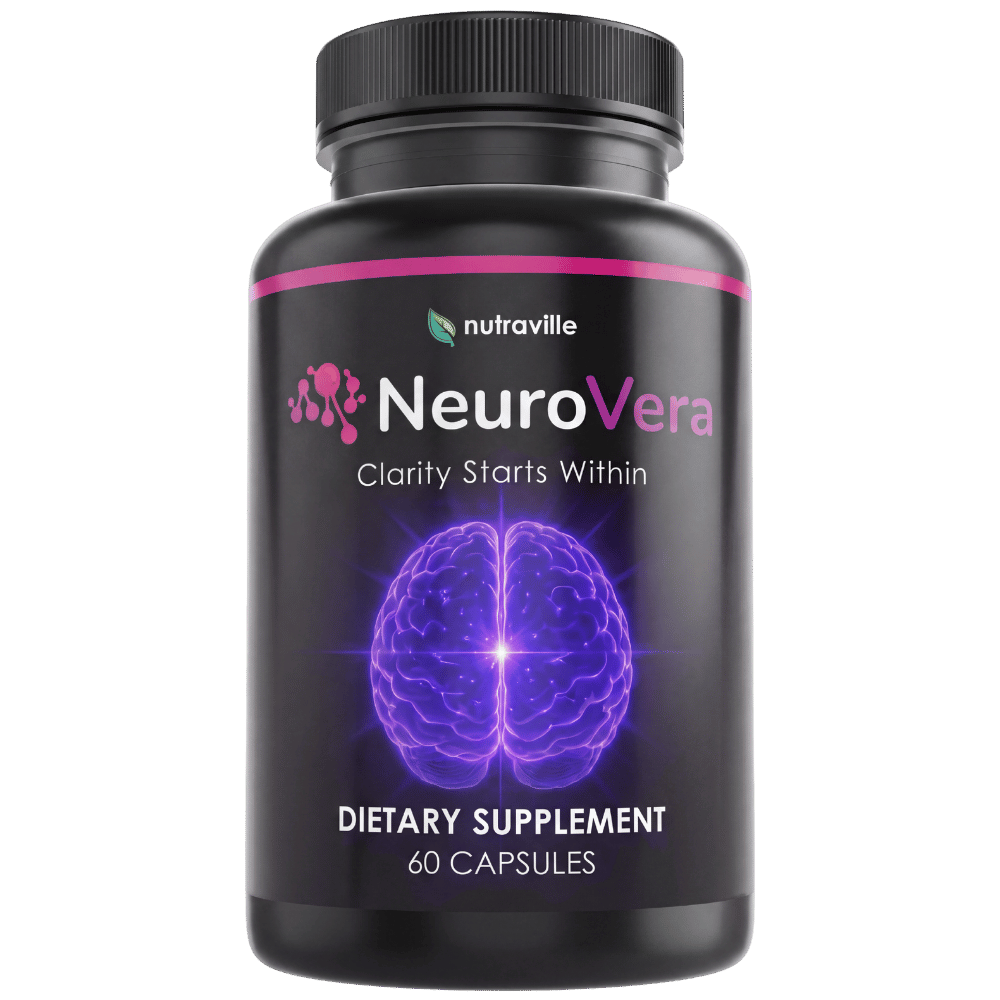
NeuroVera gives us something useful to work with: six individually disclosed active ingredients in a two-capsule serving. We can examine those ingredients, identify the precautions that matter most, and help you decide which questions should be resolved before buying.
Formula details are documented in the PRM NeuroVera Review and Research Dossier . Safety findings below are drawn from ingredient-level references.
Start with the actual formula
NeuroVera ingredients and side effects: what the research shows
Not every safety concern has the same level of evidence or importance. Some involve reactions reported in human studies. Others involve medication interactions or ingredient-quality questions. Here’s how the six ingredients compare.
| Ingredient | Research finding | What buyers should know |
|---|---|---|
|
Lion’s Mane
500 mg |
Nausea, abdominal discomfort and skin rash have been reported with some preparations. | Relevant for tolerability and ingredient sensitivity; NeuroVera-specific frequency is unknown. |
|
Schisandra
250 mg |
Effects on drug metabolism and transport; human interaction research involving tacrolimus. | The clearest medication-screening priority in this review. The tested preparation differs from NeuroVera. |
|
Gotu Kola
200 mg |
Skin reactions and published liver-injury reports. | Particularly relevant for people with liver-related health concerns. Product-level risk is unknown. |
|
Bacopa monnieri
100 mg |
Digestive complaints and headaches reported in human studies. | Tolerability deserves attention, but the studied extracts differ from the label. |
|
Shilajit
75 mg |
Potentially toxic elements identified in certain independently studied samples. | A material-quality consideration, not evidence of contamination in NeuroVera. |
|
DHA 10%
25 mg label line |
Mild digestive effects are reported with some omega-3 supplements; higher-dose products have separate medication considerations. | Pure-DHA delivery cannot be established from the reviewed label line. |
This table is a starting point, not a prediction of how your body will respond.
The next step is to focus on the findings most likely to change a real buying decision.
References: MSK — Lion’s Mane · MSK — Schisandra · MSK — Gotu Kola · Bacopa human trial .
The finding that matters most
NeuroVera and medication interactions: why Schisandra deserves a closer look
One finding deserves more attention than a general warning that supplements can interact with medication.
Schisandra, the second-largest active ingredient by labeled weight in NeuroVera, has specific human drug-interaction research behind it.
Schisandra compounds can influence enzymes and transport proteins involved in how certain medications are processed.
Memorial Sloan Kettering describes potential interactions involving CYP enzymes and P-glycoprotein.
More concretely, a clinical study involving liver-transplant patients found that a particular Schisandra preparation increased blood concentrations of tacrolimus, a prescription immunosuppressant.
This matters because the amount of some medicines circulating in the blood can be clinically important.
Established human finding
A specific interaction has been documented
The clinical study demonstrated an effect on tacrolimus concentrations with the Schisandra preparation that was tested.
That makes medication compatibility a substantive question rather than a generic precaution.
Important evidence boundary
NeuroVera was not the tested preparation
NeuroVera lists 250 mg of Schisandra fruit extract 10:1.
The research does not establish that this particular formula changes drug concentrations by the same amount.
The purpose of this finding is not to turn Schisandra into a reason for every buyer to reject the product.
It is to identify a specific situation where professional screening could prevent an avoidable problem.
If medication compatibility is relevant to you, resolving that question first is a better decision than relying on general supplement marketing.
Research: MSK Schisandra interactions · Human Schisandra–tacrolimus interaction study · NCCIH interaction guidance .
What buyers often want to know
Can NeuroVera cause stomach upset, nausea or headaches?
Those are reasonable questions, especially if you are thinking about adding a supplement to a daily routine.
Some of NeuroVera’s ingredients have been associated with these symptoms in the human safety literature.
For Lion’s Mane, Memorial Sloan Kettering identifies nausea, abdominal discomfort and skin rash among reported adverse reactions.
In a 2025 randomized Bacopa trial, participants assigned to the studied extract reported more adverse reactions than the placebo group, mainly digestive symptoms and headaches.
The trial used a characterized 300 mg/day extract, whereas NeuroVera lists 100 mg of Bacopa extract.
Digestive tolerability
Stomach discomfort and nausea
Reported with some Lion’s Mane and Bacopa preparations.
This is an ingredient-level observation, not a NeuroVera-specific occurrence rate.
Neurological symptom reporting
Headaches
Headaches appeared among adverse reactions reported in the 2025 Bacopa trial.
The study does not establish how frequently they might occur with NeuroVera.
Ingredient sensitivity
Skin reactions
Skin rash has been reported with some Lion’s Mane preparations.
If you have known ingredient sensitivities, the full label deserves attention before purchase.
The main point is straightforward: these reactions are worth knowing about, but they should not be treated as inevitable outcomes of taking NeuroVera.
If you are particularly sensitive to botanical supplements or have experienced reactions to related ingredients, that information belongs in your buying decision.
Sources: MSK — Lion’s Mane · Bacopa clinical study, 2025 .
A caution with a different evidence base
Gotu Kola and liver health: what should NeuroVera buyers know?
NeuroVera includes 200 mg of Gotu Kola whole-herb powder.
Published safety literature includes liver-injury reports associated with Gotu Kola, as discussed by Memorial Sloan Kettering.
These reports do not provide a reliable incidence rate for NeuroVera or prove that the product causes liver injury.
The practical concern is most relevant when you already have liver-related health questions.
Unexplained symptoms such as yellowing of the skin or eyes, dark urine or persistent abdominal pain merit prompt medical assessment.
This is a clinical safety precaution, not a claim that NeuroVera has been shown to produce those symptoms.
Source: MSK — Gotu Kola safety .
A product-quality question
Shilajit in NeuroVera: what does the label verify?
NeuroVera lists 75 mg of Shilajit extract standardized to 40% fulvic acid.
That provides useful information about the stated ingredient composition. It is not, however, a substitute for independent purity testing.
Published analytical research has identified potentially toxic elements in some Shilajit samples and commercial preparations.
Those researchers did not test NeuroVera, and their findings do not demonstrate contamination in this product.
PRM also has not independently authenticated a batch-specific NeuroVera contaminant test report.
If independently documented purity is important to your purchase decision, ask the seller whether relevant testing documentation can be provided.
This is a sensible quality-verification step, not a reason to make unsupported allegations about the finished supplement.
References: Shilajit analytical research · FDA dietary supplement manufacturing requirements .
Keep dose comparisons accurate
DHA 10%: why the NeuroVera label needs careful reading
The reviewed label lists “DHA (Docosahexaenoic Acid) 10% — 25 mg.”
That wording does not clearly establish how much pure DHA the serving contains.
Omega-3 supplements can cause generally mild gastrointestinal effects. Certain higher-dose products also warrant additional medication review.
However, those higher-dose findings cannot be assigned directly to this NeuroVera label line.
If you have an allergy-related concern, confirm the DHA source with the seller rather than assuming it comes from fish or algae.
Accurate interpretation matters more than filling in an uncertain number.
Sources: NIH Office of Dietary Supplements — Omega-3 · PRM NeuroVera Research Dossier .
The decision behind the purchase
A new supplement should fit your life. Your life shouldn’t have to fit around unanswered questions.
You already make plenty of decisions every day.
Maybe your schedule is full of work, family responsibilities and the small details that keep everything moving.
When a supplement offers a simple two-capsule routine and a clearly disclosed formula, it’s easy to understand the appeal.
You may appreciate the convenience of having several recognizable ingredients in one product.
And NeuroVera does provide a formula you can inspect.
But buying with confidence involves more than liking the ingredient list.
It also means knowing whether anything in that list could conflict with medication, medical history or sensitivities that are already part of your life.
The goal isn’t to eliminate every uncertainty by pretending it doesn’t exist. It’s to resolve the questions that actually matter to you.
Once those questions are answered, the decision becomes simpler: does NeuroVera’s formula, convenience and current offer deserve a place on your shortlist?
That’s a much stronger position to buy from than relying on a dramatic promise.
Turn the evidence into a decision
Should these safety warnings rule out NeuroVera?
Not automatically.
An ingredient having a published adverse reaction or interaction does not establish that every user of a different finished supplement will experience it.
At the same time, some findings matter much more for particular people than for others.
That’s why the most useful next step is to identify which situation applies to you.
The offer may be worth evaluating if…
You’ve addressed the safety questions relevant to you
- You understand the six active ingredients and their disclosed amounts.
- You have reviewed relevant allergies and sensitivities.
- Any medication or medical-condition questions have been resolved with appropriate professional guidance.
- You’re comfortable with the limits of finished-formula safety evidence and verified product testing.
- You value a straightforward multi-ingredient routine and want to compare the current offer.
Resolve these questions first if…
A meaningful compatibility or quality concern remains open
- You take prescription medications that may interact with botanicals.
- You have liver-related concerns or a relevant medical condition.
- You have known mushroom or botanical sensitivities.
- You are pregnant, nursing or preparing for a medical procedure.
- You require specific purity documentation that has not been verified.
These are not two labels for “safe” and “unsafe.”
They describe whether important questions have been addressed before purchasing.
Four checks. A clearer next step.
What to check before buying NeuroVera
You don’t need to memorize every clinical detail in this guide.
Focus on four practical questions that can change your purchase decision.
Check 01 / Formula
Does the current label match?
Confirm the six active ingredients, their doses and the other ingredients listed for the product you’re considering.
Check 02 / Compatibility
Is there a medication or health concern?
Have a pharmacist or clinician review the complete formula when prescriptions or relevant medical conditions are involved.
Check 03 / Quality
Do you require specific testing records?
If independent batch-quality documentation is essential, request it rather than assuming it exists.
Check 04 / Purchase
Does the current offer fit your decision?
Once relevant safety concerns are resolved, compare the current seller information, package options and purchase terms.
That is the practical difference between reading about possible side effects and using the information to buy intelligently.
When you’re ready to compare the offer
You know what to check. Now you can evaluate NeuroVera more confidently.
NeuroVera offers six individually disclosed active amounts in a two-capsule serving.
You’ve seen which side effects have been reported with individual ingredients, why Schisandra deserves a medication review when relevant, and what remains uncertain about the finished formula.
If those findings are compatible with your own circumstances, and any relevant professional checks are complete, there’s a logical next step.
Review the current NeuroVera offer, confirm the label and decide whether the product and purchase terms match what you’re looking for.
You don’t need an exaggerated promise to make that decision. You need clear information and a product that meets your standards.
Frequently asked questions
NeuroVera side effects and safety: common questions answered
What are the possible side effects of NeuroVera?
NeuroVera contains ingredients associated with nausea, digestive discomfort, headaches and skin reactions in ingredient-level research. Schisandra has drug-interaction concerns, and Gotu Kola has published liver-injury reports. A product-specific adverse-event rate has not been established.
Is NeuroVera safe to take daily?
The reviewed label provides a two-capsule serving and 30 servings per bottle. That does not establish finished-formula long-term safety. Individual suitability depends on health, medications and ingredient sensitivities.
Can NeuroVera cause stomach discomfort?
Nausea and abdominal discomfort have been reported with certain Lion’s Mane preparations. Bacopa studies have also documented digestive complaints. Those findings do not determine the frequency of symptoms with NeuroVera.
Can NeuroVera cause headaches?
Headaches were among adverse reactions reported in a 2025 study of a Bacopa extract. The studied dose and preparation differ from NeuroVera’s labeled inclusion.
Does NeuroVera interact with medications?
Schisandra has published drug-interaction evidence, including human findings with tacrolimus and a particular Schisandra preparation. This was not a NeuroVera trial. Have the complete formula reviewed by a pharmacist or clinician before combining it with medication.
Is NeuroVera safe for the liver?
A finished-formula clinical liver-safety trial was not identified in PRM’s reviewed research. Published liver-injury reports involve Gotu Kola at the ingredient level and do not establish injury caused by NeuroVera. People with liver concerns should seek individualized medical guidance.
Is NeuroVera’s Shilajit tested for heavy metals?
PRM did not independently authenticate a batch-specific contaminant test report for NeuroVera. Findings from unrelated Shilajit samples cannot establish contamination in this product. Buyers who need independent purity documentation should request it from the seller.
Can NeuroVera cause allergic reactions?
Skin reactions have been reported with some Lion’s Mane preparations. Check the complete ingredient panel if you have mushroom or botanical allergies. Difficulty breathing or swelling of the face or throat may indicate a severe allergic reaction and requires emergency medical attention.
Does NeuroVera contain enough DHA for a high-dose omega-3 interaction?
The reviewed label includes a DHA 10% line at 25 mg, but does not clearly quantify pure DHA. Findings involving much higher omega-3 doses cannot be directly applied to that line.
Who should speak with a clinician before taking NeuroVera?
People taking prescription medication, managing medical conditions, preparing for surgery, or experiencing relevant ingredient sensitivities should seek appropriate professional advice. People who are pregnant or breastfeeding should not assume safety without such guidance.
Has NeuroVera been clinically tested for safety as a complete formula?
PRM did not identify a published clinical safety trial of the complete formula in its reviewed research record. Studies of individual ingredients cannot establish the finished product’s adverse-event rate.
Should side-effect concerns automatically rule out NeuroVera?
Not automatically. Published ingredient-level findings do not establish that every NeuroVera user will experience an adverse effect. The appropriate decision depends on your medications, medical history, sensitivities and the evidence you require before buying. Resolve relevant safety questions first.
How we evaluated the evidence
Our NeuroVera safety review methodology
Pro Review Metric used its documented NeuroVera Supplement Facts panel as the formula reference for ingredient identity, amount and serving size.
We reviewed clinical and ingredient-safety information from Memorial Sloan Kettering, the National Institutes of Health, NCCIH and PubMed-indexed studies.
The review distinguishes adverse reactions observed in humans from interaction mechanisms, published case reports and ingredient-quality concerns.
The Schisandra–tacrolimus study involved a specific preparation, not NeuroVera. Gotu Kola case reports cannot quantify risk from the finished formula. Shilajit analytical research did not test a NeuroVera batch.
PRM did not independently test a purchased bottle, perform a contaminant assay, verify individual adverse-event reports or conduct a finished-formula clinical trial.
Consequently, this guide does not claim that NeuroVera is universally safe or unsafe, and does not assign it an invented side-effect percentage.
For the individual ingredient doses, consult the NeuroVera Ingredients Guide .
For deeper scientific context and the broader product assessment, see the NeuroVera Research Dossier and full NeuroVera Review .
Sources reviewed October 19, 2026: MSK — Lion’s Mane · MSK — Schisandra · MSK — Gotu Kola · Bacopa human trial · Schisandra–tacrolimus interaction study · Shilajit analytical study · NIH — Omega-3 safety · NCCIH — Medication interactions · PRM NeuroVera Research Dossier .