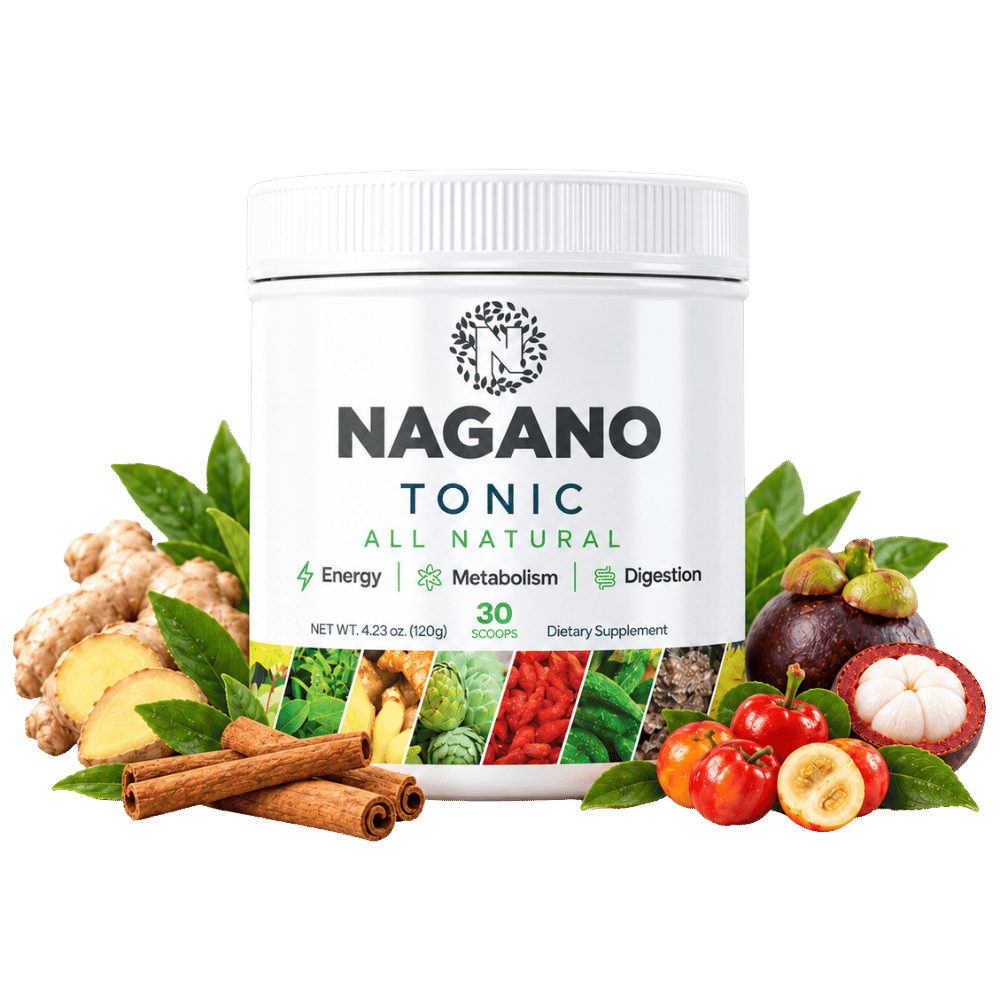
Disclosure: We may earn a commission if you purchase through links on this page, at no additional cost to you. Our editorial conclusions are developed independently.
Know what to check before the first scoop
Does Nagano Tonic have side effects?
Yes, Nagano Tonic contains ingredients that may cause digestive discomfort or interact with medications. Inulin and probiotics can contribute to gas or bloating in some people. Ashwagandha, green tea extract and bitter melon raise different questions involving medicines and specific health conditions. The frequency of side effects from Nagano Tonic itself has not been established.
If you are considering adding one scoop to your daily routine, you probably want more than a long list of possible reactions. You want to know which concerns are relevant to you—and whether there is a sound reason to move forward.
That distinction matters with this formula. An occasional digestive symptom deserves a different response from an unresolved interaction with medication you take for diabetes or thyroid disease. And a published warning about one concentrated botanical extract does not tell us how often a reaction occurs with this finished powder.
A useful safety assessment should help you make a decision, not leave you afraid of every ingredient on the label.
Formula details come from the documented Supplement Facts in the Nagano Tonic Research Dossier. Safety references concern the listed ingredients and other preparations.
The questions worth answering first
Which Nagano Tonic ingredients deserve the closest safety review?
Start with the type of risk, not the length of the ingredient list. The same formula can raise a manageable tolerability question for one person and a medication-related reason to pause for another. This table shows where to focus your attention.
| Ingredient or group | Documented concern from other preparations | Who should pay attention? |
|---|---|---|
| Chicory inulin + probiotics | Gas, bloating or digestive changes may occur. | People with sensitive digestion or IBS; severely ill or immunocompromised people require additional probiotic caution. |
| Ashwagandha | Stomach upset, drowsiness and rare reports of liver injury; thyroid and medication considerations. | People with thyroid, autoimmune or liver concerns; users of sedatives, thyroid medication or other interacting drugs. |
| Green tea extract | Nausea, abdominal symptoms, blood-pressure or medication considerations; uncommon liver injury with some extracts. | People with liver concerns, medication use or sensitivity to stimulants. |
| Bitter melon + Panax ginseng | Potential effects on blood-glucose management; ginseng can also disturb sleep. | Especially people taking insulin or other glucose-lowering medication. |
| Bromelain + papain | Allergic reactions or digestive symptoms; bromelain has possible anticoagulant interaction concerns. | People with relevant food/enzyme allergies or blood-thinning treatment. |
What matters most: gas after a fiber supplement is not the same type of issue as a possible medication interaction. Separating them helps you decide what to monitor, what to ask about and when a purchase should wait.
The most familiar tolerability question
Can Nagano Tonic cause bloating, gas, nausea or diarrhea?
Digestive discomfort is a plausible ingredient-related possibility. Nagano Tonic contains chicory-root inulin and five listed probiotic strains, alongside herbs and enzymes. Some people experience gas or bloating with fermentable prebiotic fibers; probiotic products may also cause temporary gastrointestinal symptoms.
For a buyer with a comfortable digestion routine, that may simply be an issue to understand. For someone who already spends time adjusting foods to avoid bloating or IBS symptoms, it can be a decisive consideration before buying another daily drink.
Prebiotic ingredient
Chicory-root inulin
Inulin is a fermentable fiber. Monash University’s FODMAP guidance notes that it can worsen gas-related symptoms for some people with irritable bowel syndrome.
Buyer takeaway: a digestive-focused ingredient is not automatically comfortable for every digestive system.
Five listed strains
The probiotic blend
The label declares 2.5 billion CFU at manufacture in a 22.5 mg blend. NIH notes that probiotic side effects in healthy people are generally minor and may include gas.
Buyer takeaway: the presence of probiotics does not mean every digestive response will be beneficial or predictable.
Botanical and enzyme ingredients
Other possible sources of discomfort
Ashwagandha and certain green tea extract preparations have been associated with nausea or stomach symptoms. Oral enzyme preparations can also cause gastrointestinal effects.
Buyer takeaway: several parts of the formula deserve consideration if you already know you are sensitive to supplement mixtures.
If you have previously struggled with inulin, prebiotic drinks or probiotic products, that personal history is more useful to your choice than a generic promise of digestive support. It may be worth discussing before committing to a new daily powder.
Understand the difference between tea and an extract
Does Nagano Tonic’s green tea extract raise liver or caffeine concerns?
Green tea extract deserves attention because some concentrated preparations have been associated with stomach symptoms, higher blood pressure, medication interactions and uncommon reports of liver injury. Ordinary brewed tea and a concentrated supplement extract are not equivalent preparations.
Nagano Tonic’s documented herbal blend lists a green tea extract standardized to 98% polyphenols, 80% catechins and 50% EGCG, with less than 1% caffeine in the extract. Those percentages help describe the ingredient’s specification. They do not give the amount of extract, EGCG or caffeine in one finished scoop.
What the label tells you
A standardized green tea ingredient
You can identify an extract within the nine-botanical blend and the stated concentration specifications.
That is more informative than a generic “green tea” listing, but it cannot be converted into a per-scoop EGCG dose without the extract’s individual weight.
What needs individualized review
Liver history and medicines
NCCIH documents uncommon liver injury reports involving green tea products, mostly concentrated extracts, and interactions involving medications such as nadolol and atorvastatin.
If you take regular medication or have a liver condition, do not treat a low-caffeine extract claim as a substitute for a suitability assessment.
What this changes for you: if you have a liver condition or take an interacting medicine, this ingredient deserves a specific review. Otherwise, understand the extract specification without assuming a caffeine-free drink or a particular health outcome.
NCCIH — Green Tea: Usefulness and Safety.
A popular herb with specific cautions
What are the possible ashwagandha side effects in Nagano Tonic?
Ashwagandha preparations may cause drowsiness, stomach upset, diarrhea or vomiting. Rare cases of liver injury have been reported, and the herb may interact with medications or be unsuitable in certain thyroid, autoimmune and reproductive-health circumstances.
Ashwagandha root powder appears in Nagano Tonic’s 800 mg herbal blend. The label does not identify its individual amount. For buyers, the key question is therefore practical: does your health history or medication make this ingredient important enough to review before trying the product?
Everyday tolerance
Stomach upset or sleepiness
These effects have been reported with some ashwagandha preparations and matter if you already experience digestive symptoms or take sedating medication.
Medical context
Thyroid, autoimmune and liver issues
NCCIH advises caution or avoidance in several relevant conditions and reports rare liver-injury cases. An individual’s diagnosis and medication list can change the decision.
Pregnancy and breastfeeding
Do not assume a botanical blend is appropriate
NCCIH advises avoiding ashwagandha during pregnancy and breastfeeding. That makes the ingredient’s presence particularly relevant even when its individual dose is unknown.
If one of these contexts applies, address it with your clinician before buying. If it does not, you can move to the next suitability question rather than letting a warning meant for a different situation decide for you.
NCCIH — Ashwagandha: Usefulness and Safety.
A purchasing question that should come before the checkout
Can bitter melon or Panax ginseng interact with diabetes medication?
Potentially, yes. Bitter melon may have additive blood-glucose-lowering effects with insulin or other diabetes medications, and Panax ginseng may also influence blood sugar. These are reasons for individualized medication review—not evidence that Nagano Tonic itself reliably lowers glucose.
If you already manage blood sugar, the presence of these botanicals makes the medication question more important—not the product more proven. A convenient daily powder still has to fit the treatment plan you already follow.
Bitter melon fruit powder
A possible additive effect
Memorial Sloan Kettering advises against combining bitter melon with insulin or glucose-lowering medication without medical guidance, because of possible additive effects.
The severe case reports sometimes discussed in bitter melon literature involve particular preparations or exposures and should not automatically be attributed to this mixed powder.
Panax ginseng root
Medication and sleep considerations
NCCIH notes conflicting evidence about glucose effects from Asian ginseng, possible interactions with medicines and insomnia as a commonly reported side effect.
For someone taking medication, the practical question is compatibility, not whether the ingredient has an appealing reputation.
Buyer direction: if you use insulin or another glucose-lowering medicine, ask your diabetes care team or pharmacist to review the full formula before you purchase. Do not adjust prescribed treatment to accommodate a supplement.
MSK — Bitter Melon · NCCIH — Asian Ginseng.
The digestive blend has its own safety considerations
Can bromelain or papain cause allergies or medication interactions?
Yes, relevant enzyme preparations can cause digestive symptoms or allergic reactions. Bromelain also has a potential bleeding-related interaction concern with anticoagulant medications, based largely on preclinical evidence.
Nagano Tonic lists bromelain from pineapple stem and papain from papaya fruit. Bromelain is described with a powder activity specification of 2,400 GDU/g, but the label does not give its individual amount in the 406 mg digestive complex.
Allergy history
Pineapple, papaya and enzyme sensitivity
People with relevant food or enzyme allergies should not assume that the finished powder will be suitable. A previous serious allergic response warrants professional assessment before exposure.
Blood-thinning medicines
Bromelain deserves a closer look
MSK notes possible anticoagulant interactions based on laboratory findings; clinical relevance is not firmly established. People taking blood thinners should still have the complete formula reviewed.
Antibiotic treatment
Another interaction to mention
MSK reports that bromelain may change exposure to tetracycline antibiotics in some contexts. If that is relevant to your treatment, bring the full ingredient list to the prescribing clinician or pharmacist.
Why this matters: a component marketed as digestive support can still be the ingredient that changes whether a formula is right for a person with an allergy or medication concern.
Memorial Sloan Kettering — Bromelain.
The five-strain blend in context
Are Nagano Tonic’s probiotics safe for everyone?
No probiotic combination should be assumed suitable for everyone. For many healthy adults, probiotic side effects are minor, such as gas. But NIH reports rare, serious infections linked to probiotic use in vulnerable groups, particularly people who are severely ill or have significantly weakened immune systems.
Nagano Tonic names five strains and states 2.5 billion CFU at manufacture. If you are evaluating a probiotic for a specific health need, note that the label does not establish the live count through expiration. For this Guide’s safety decision, your immune status matters more than the headline CFU number.
NIH ODS — Probiotics: Consumer Fact Sheet.
What the Supplement Facts cannot predict
Does one scoop or a low declared caffeine percentage prove Nagano Tonic is safe?
No. “One scoop” is a serving instruction, not a personal safety guarantee. The same principle applies to the low caffeine percentage stated for its green tea extract: without the extract’s individual amount, the finished scoop’s caffeine quantity remains unknown.
The documented label discloses 2 g for the greens blend, 800 mg for herbs and extracts, 406 mg for the digestive complex and 22.5 mg for probiotics. It does not disclose the individual amounts of ashwagandha, green tea extract, bitter melon, inulin or bromelain.
What we can assess
Ingredients, blend totals and sensible screening questions
The component list supports a meaningful review of medication categories, allergies, digestive tolerance and known ingredient-level cautions.
What we cannot calculate
Individual exposure and product-specific adverse-event rates
We cannot derive the studied dose of every botanical or estimate how often this exact finished product causes a particular reaction.
Use that uncertainty as a decision criterion, not a warning to reread indefinitely. If an exact ingredient exposure is essential for your situation, request manufacturer clarification or consider a product with individual doses. If it is not essential and your relevant health questions are resolved, the overall formula can be compared on its real practical value.
Your existing treatment plan matters more than the supplement pitch
Which medications or health conditions call for a review before use?
Diabetes treatment, thyroid medication, sedatives, anticoagulants and certain other long-term medicines are examples where the ingredient list deserves a clinician or pharmacist review. The table is a decision aid, not a complete interaction database.
| Your situation | Ingredient-level reason to ask | Appropriate next step |
|---|---|---|
| Insulin or diabetes medication | Bitter melon and Panax ginseng have glucose-related considerations. | Have your treatment team check compatibility; do not alter prescription doses on your own. |
| Thyroid medication or thyroid/autoimmune disorder | Ashwagandha raises condition-specific and thyroid hormone interaction questions. | Review the complete formula before considering use. |
| Sedatives or medicines affecting the immune system | Ashwagandha may interact with sedatives or immunosuppressive drugs; live probiotic use also needs care in vulnerable patients. | Seek individualized medical or pharmacy advice. |
| Blood thinners or a planned procedure | Bromelain and other botanicals warrant bleeding- and perioperative-interaction review. | Tell the prescriber or surgical team about all supplements; follow their directions. |
| Cardiovascular or cholesterol medication | Some green tea extract preparations have documented interactions with certain drugs. | Ask a pharmacist to assess the specific medication and full label. |
| Liver disease, pregnancy or breastfeeding | Ashwagandha and certain other ingredients make these situations particularly important; pregnancy guidance advises avoidance of specific herbs. | Do not begin this multi-botanical supplement without individualized professional guidance. |
You do not have to guess. A clinician or pharmacist can review your specific medication list alongside the supplement label. Never change prescribed treatment to make room for a supplement; resolve the interaction question before proceeding.
NCCIH — Medication/Supplement Interactions.
A plan is more useful than trying to guess afterward
What should you do if you notice a reaction after taking Nagano Tonic?
Stop using the supplement if you develop a concerning reaction and seek medical advice appropriate to its severity. A symptom after use does not automatically prove the supplement caused it, but it should not be ignored simply because the formula contains familiar plant ingredients.
Digestive discomfort
Persistent nausea, cramps, diarrhea or bloating
Stop using the product if symptoms are concerning, persist or worsen. A clinician can help distinguish a supplement-related issue from another cause.
Possible allergy
Rash, swelling or breathing symptoms
Seek medical guidance for a suspected allergic reaction. Difficulty breathing, throat or facial swelling, or collapse requires emergency care.
Possible glucose problem
Shaking, sweating, confusion or fainting
These can be signs of low blood sugar from various causes. People with diabetes should follow their established medical action plan; severe confusion, loss of consciousness or seizures require emergency help.
Potential serious symptoms
Jaundice, dark urine, unusual bleeding or severe illness
Prompt medical evaluation is important. Severe or rapidly worsening symptoms require urgent care. These are warning signs to recognize, not proven events in Nagano Tonic users.
Keep the packaging and note when the product was taken, what else you used and when symptoms began. Do not take extra scoops to compensate for an underwhelming result or restart a product after a significant suspected reaction without appropriate advice.
NCCIH — Using Dietary Supplements Wisely.
The question no sales headline can answer for you
A simple morning scoop should not create a complicated health decision.
Imagine being ready to order a daily greens-and-herbs powder, then noticing ashwagandha and bitter melon on the label. If you take a thyroid tablet or manage blood sugar, the question is suddenly personal: does this mix belong alongside what I already take?
Or perhaps it’s the inulin that catches your attention because a previous fiber drink left you uncomfortable. Now you are not looking for another promise about digestion. You are looking for a reason to believe this choice has been properly considered.
That hesitation deserves a real answer, not reassurance from the word “natural.” Sometimes the answer is to ask a pharmacist. Sometimes it is to avoid the product. Sometimes a review of your circumstances leaves you free to decide whether the convenience is worth the cost.
Confidence is not pretending there are no risks. It is knowing which ones are relevant to you before committing your health, money or routine.
And if a clinician advises against it, you have not lost an opportunity. You have avoided a purchase that did not belong in your routine.
Once the important questions are answered, you can judge Nagano Tonic as a product rather than as a list of worries.
A clear decision before the offer
Who should pause, and who may still consider Nagano Tonic?
The right next step depends less on whether an ingredient has ever caused a side effect and more on whether a material concern applies to you. Use these considerations to decide whether to continue comparing the offer or address a health question first.
Reasonable to evaluate further if…
The formula fits your needs and your health questions are addressed
- You are an adult interested in combining greens, herbs, digestive ingredients and probiotics in one powder.
- You have reviewed the complete formula for personal allergies and digestive sensitivities.
- You have resolved any relevant medication or medical-condition concerns with an appropriate professional.
- You understand that ingredient-level reports do not establish the finished product’s reaction rate.
- You accept the label’s limited individual-dose disclosure and want to compare the actual seller offer.
Pause the purchase if…
A meaningful safety question remains unanswered
- You are pregnant, breastfeeding or considering the formula for a child.
- You use insulin, glucose-lowering medicines, thyroid medication, sedatives, immunosuppressants or blood thinners without having the combination reviewed.
- You have a liver condition, significant thyroid or autoimmune concern, serious immune compromise or upcoming surgery.
- You have a relevant allergy or previously reacted to similar botanical or enzyme preparations.
- You need exact ingredient doses or finished-product safety evidence before committing.
There are two honest outcomes: resolve a relevant health concern before spending, or—if the formula is appropriate for you—move forward to a normal comparison of supply, total price and seller terms. Neither path requires ignoring the evidence.
Don’t let package size make the decision
Should you buy a multi-jar supply before checking tolerability?
Choose a quantity only after you have addressed suitability. Each documented Nagano Tonic jar contains 30 labeled servings. Seller presentations have shown one-, three- and six-jar options, although current availability and delivered prices must be checked.
Once the important health questions are settled, package size becomes a normal buying decision: how much will you realistically use, and is the total commitment reasonable? A lower unit price matters only when the quantity makes sense for you.
01 · Check suitability
Resolve medical and medication questions first
If a significant concern is unanswered, don’t use an offer deadline or larger-package savings as a reason to skip the assessment.
02 · Understand commitment
Count actual servings, not just jars
Thirty labeled scoops per jar can inform a supply comparison. It does not establish that prolonged use is safe for a particular person.
03 · Read seller terms
Know how a return would work
The published policy provides 180 days from shipment, with a support contact and return of all jars, including empty ones, at the buyer’s shipping expense.
The refund policy is useful purchase information, not a medical safeguard. Read it alongside the current checkout total so you can assess what you are actually committing to.
The health check comes first. The choice is yours.
Safety questions addressed? See whether the Nagano Tonic offer makes sense for you.
If the ingredients have passed your personal suitability check, you can return to the reason this product caught your attention: greens, botanicals, digestive ingredients and probiotics combined in one daily powder. You no longer have to make the decision through either a sales promise or an unexplained fear.
Now assess the actual offer. A 30-serving jar may be enough for your intended commitment; a larger supply is worth considering only if you expect to use it and the complete cost makes sense. Compare package totals, shipping, merchant and return terms on the seller’s current page.
When the safety questions are resolved and the formula fits your routine, the next step is simple: compare the available offer and decide what you would genuinely use.
The offer link opens the seller’s presentation, not a preselected package. Confirm the current terms and only proceed if the formula is appropriate for you.
PRM’s final safety assessment
Is Nagano Tonic safe enough to consider buying?
Nagano Tonic may be worth considering if its ingredients are appropriate for you, but there is no verified product-specific side-effect rate that would justify calling it risk-free.
Its appeal is clear: four ingredient categories in a single daily powder with 30 labeled servings per jar. Its safety questions are equally concrete: digestive tolerance for some shoppers, medication or condition-specific interactions for others, and limited dose transparency for anyone needing a precise exposure assessment.
That clarity matters commercially: convenience can be a sound reason to compare a product, but only after you know whether the combination belongs in your routine.
Knowing where you stand on those points is more valuable than either an unconditional endorsement or an exaggerated warning. It gives you a purchase decision you can explain and stand behind.
Frequently asked questions
Nagano Tonic side effects and interactions: FAQs
What side effects can Nagano Tonic cause?
Its ingredients raise possible concerns including gas, bloating, nausea, digestive discomfort, drowsiness and medication interactions. Uncommon liver-related reports exist for certain green tea extract and ashwagandha preparations. These are not verified reaction rates for Nagano Tonic itself.
Is Nagano Tonic safe for everyone?
No multi-ingredient supplement can be assumed suitable for everyone. Personal medical conditions, medications, allergies, pregnancy and immune status may change whether the formula is appropriate. Product-specific long-term safety has not been established by the evidence reviewed here.
Can Nagano Tonic cause gas or bloating?
It could. Chicory-root inulin is fermentable and probiotics can cause gas in some people. This is a plausible ingredient-related concern, not a known incidence rate for the finished product.
Can Nagano Tonic cause diarrhea or nausea?
Digestive symptoms have been reported with some of its ingredient categories, including ashwagandha and green tea extract preparations. The label does not establish whether Nagano Tonic causes those symptoms with a predictable frequency.
Does the green tea extract in Nagano Tonic contain caffeine?
Its documented specification states less than 1% caffeine in the green tea extract. Because the extract’s weight per scoop is not separately disclosed, the total caffeine amount cannot be calculated and a caffeine-free claim is not established.
Can Nagano Tonic damage the liver?
Uncommon liver injury has been reported with some standalone ashwagandha and concentrated green tea extract products. That does not demonstrate liver injury caused by Nagano Tonic. Anyone with liver disease or concerning symptoms should obtain medical advice before or during supplement use.
What are the ashwagandha side effects to know?
Reported effects with some preparations include drowsiness, stomach upset, diarrhea and vomiting, with rare reports of liver injury. Ashwagandha also raises medication, thyroid and pregnancy-related cautions. Its exact amount in Nagano Tonic is not disclosed.
Can I take Nagano Tonic with metformin or insulin?
Do not assume compatibility. Bitter melon and Panax ginseng have blood-glucose-related considerations, and other ingredients may matter. Ask your diabetes clinician or pharmacist to assess the complete formula before use; do not change prescribed doses independently.
Is Nagano Tonic appropriate for someone with thyroid disease?
Ashwagandha may affect thyroid-related conditions and interact with thyroid hormone medication. A person with thyroid disease should seek individualized professional guidance before considering this formula.
Can Nagano Tonic interact with blood thinners?
Bromelain has possible anticoagulant-interaction concerns, mainly from preclinical findings; other botanical factors may also matter. People using anticoagulants or antiplatelet medication should have the full label reviewed by a qualified professional before use.
What about allergies to pineapple or papaya?
Nagano Tonic includes bromelain from pineapple stem and papain from papaya fruit. Relevant food or enzyme allergies warrant caution. A history of significant allergy should be assessed before trying the formula.
Can probiotics in Nagano Tonic cause infections?
Serious probiotic-associated infections are uncommon but have been reported mainly in severely ill or immunocompromised individuals. That is a reason for medical guidance in vulnerable groups, not evidence of an infection rate with Nagano Tonic.
Is Nagano Tonic safe during pregnancy or breastfeeding?
The complete formula has not been established as safe in pregnancy or breastfeeding, and ashwagandha is specifically advised against in these circumstances by NCCIH. Do not begin using the product without individualized medical guidance.
Does one scoop prove the ingredient doses are safe?
No. The label lists total weights for four blends, not the individual amounts of most active botanicals and digestive ingredients. A serving instruction does not establish safety for every health condition or medication combination.
Is it wise to buy several jars before trying Nagano Tonic?
Resolve any relevant safety and medication questions first. Multiple jars may reduce average cost in some offers, but a discount does not justify buying a quantity you might not use or a formula that is inappropriate for you.
What should I do if I have a reaction?
Stop using the supplement and seek appropriate medical advice. Severe allergic symptoms, collapse, significant confusion, seizures or other severe symptoms require emergency help. Retain the label and details of what was taken for your clinician.
Where can I see the exact ingredients and full buying verdict?
The Nagano Tonic Research Dossier documents the formula and evidence. The complete PRM Review addresses the broader buying decision.
Evidence and methodology
How PRM evaluated Nagano Tonic’s potential side effects
We used the Nagano Tonic Supplement Facts documented by PRM to identify its four blend groups, ingredient names and total weights. We then examined independent NIH, NCCIH, Memorial Sloan Kettering and Monash University sources covering relevant botanicals, probiotic use, fiber tolerance and medication interactions.
We distinguish label facts from published ingredient-level concerns and from unknowns about the complete product. We did not personally consume Nagano Tonic, perform laboratory testing, administer a clinical trial, verify manufacturing-batch safety or measure adverse-event frequency among its customers. Published risks involving different preparations and doses cannot be converted into numerical probabilities for this finished powder.
This assessment reflects sources reviewed on November 12, 2026. Formulation, packaging and seller policies can change; confirm the current label and transaction details before purchasing.
Product documentation and purchase terms
- PRM — Nagano Tonic Research Dossier: documented Supplement Facts and composition.
- PRM — Nagano Tonic Review: full commercial and editorial product assessment.
- Nagano Tonic seller — Refund & Returns Policy: current published return process.
Independent safety references
- NCCIH — Ashwagandha: Usefulness and Safety.
- NCCIH — Green Tea: Usefulness and Safety.
- NCCIH — Asian Ginseng.
- Memorial Sloan Kettering — Bitter Melon.
- Memorial Sloan Kettering — Bromelain.
- NIH ODS — Probiotics: Consumer Fact Sheet.
- Monash FODMAP — Fiber Supplements and IBS.
- NCCIH — Important Medication/Supplement Interactions.
This Guide is educational and does not replace individualized medical advice. A known ingredient-level risk does not prove that a particular reaction occurred in a Nagano Tonic user. Review PRM’s editorial methodology for our evidence approach.