Disclosure: We may earn a commission if you purchase through links on this page, at no additional cost to you. Our editorial conclusions are developed independently.
A two-dropper routine deserves a thoughtful safety check
Does Prostadine have side effects?
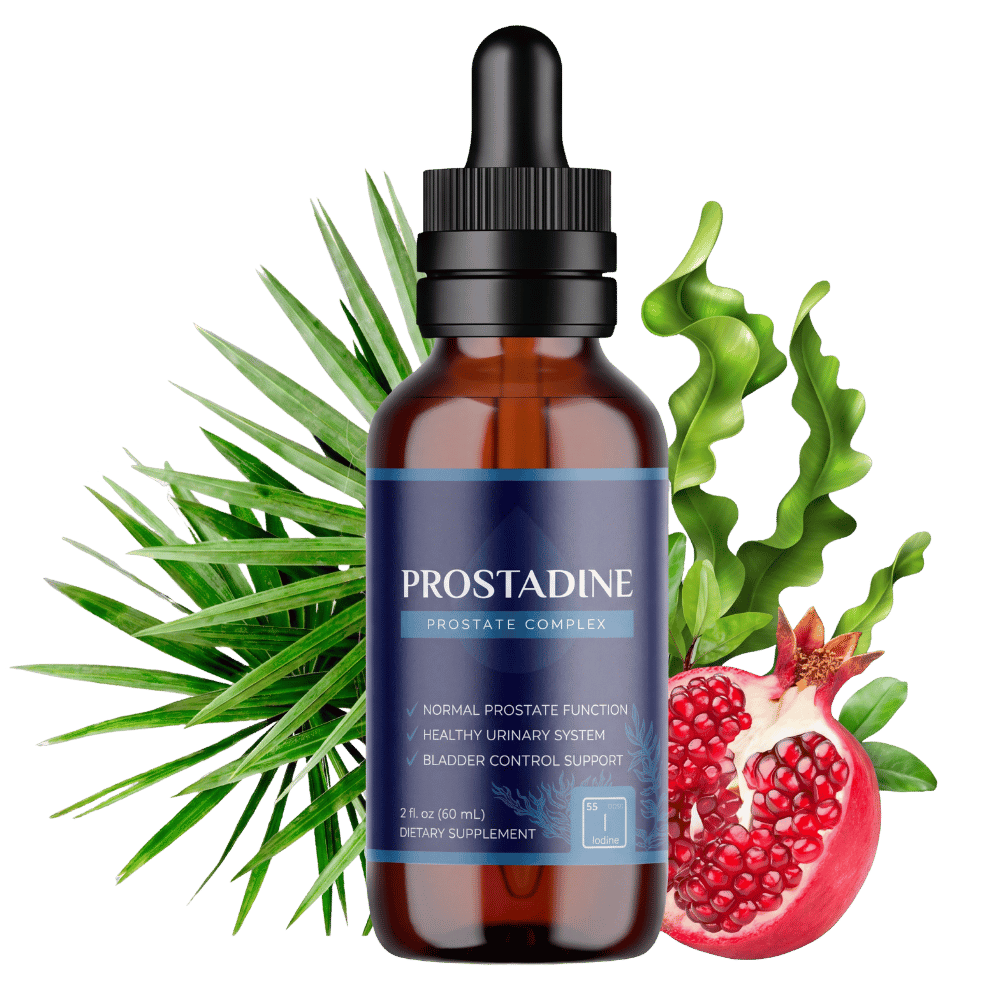
Prostadine may cause unwanted reactions or be unsuitable alongside certain health conditions or medicines. Its reviewed label supplies 275 mcg of iodine per 2 mL serving, alongside nori, wakame, kelp and bladderwrack, plus a 500 mg proprietary blend of neem oil and saw palmetto essential oil. Thyroid status, total iodine exposure, medication use and uncertainty about the oil doses are the main factors to check. PRM has not identified a clinical study establishing the side-effect rate or long-term safety of the complete Prostadine liquid.
The appeal of Prostadine is easy to understand: instead of another handful of capsules, the label describes two full droppers in the morning. If bathroom interruptions have made you more conscious of your routine, a simple product can sound like one less thing to manage.
But simplicity only becomes an advantage if the formula fits the rest of your life. The thyroid medicine in your cabinet, a multivitamin containing iodine, a prescription you take for blood pressure, or an upcoming medical appointment can matter more than a bottle’s attractive format.
Amounts follow the Prostadine physical Supplement Facts panel documented by PRM on September 8, 2026, and the Research Dossier. Current batches, labels and individual health risks have not been independently tested.
What your own situation changes
Which four questions matter most before using Prostadine?
Start with total iodine, your medication list, the undisclosed oil split and the reason you are considering the product. These four questions are more useful than assuming a liquid labeled natural will suit everyone—or treating every possible reaction as inevitable.
01 — Thyroid and iodine
Do you already receive iodine from other sources?
Think about iodized salt, seafood, dairy, multivitamins, kelp capsules and thyroid-related treatment. The declared 275 mcg is meaningful context, but it is not a calculation of everything you consume in a day.
02 — Medicines
Would a clinician need to check the combination?
Antithyroid treatment, potassium-related medicines, prescribed prostate treatment, anticoagulants and preparations for surgery warrant a medication review. The concern is compatibility, not proof that this specific Prostadine serving causes an interaction.
03 — Botanical oils
Are you comfortable with the undisclosed split?
The 500 mg figure covers neem oil and saw palmetto essential oil together. You cannot tell the amount of either component or compare it confidently with an independently studied preparation.
04 — Symptoms
Does the urinary concern need diagnosis first?
Frequent urination, weak flow or repeated nighttime waking can have multiple causes. A supplement should not delay evaluation of persistent or worsening symptoms, and some symptoms require urgent care.
This checklist does not require you to abandon a product you find interesting. It gives you a way to decide whether that interest deserves a closer look—or whether a specific question should be settled before spending money.
The most important declared nutrient
Is the 275 mcg iodine in Prostadine too much?
275 mcg is above the U.S. recommended daily amount for most adults (150 mcg), but below the adult tolerable upper intake level of 1,100 mcg when considered alone. The reviewed Prostadine label reports 183% Daily Value. None of these figures establishes that it is safe for a particular person, especially someone with thyroid disease or additional iodine intake.
Iodine helps the thyroid make hormones. Too little can be harmful, but excessive intake can also affect thyroid function, and people with certain pre-existing thyroid problems can respond to amounts tolerated by others. The NIH fact sheet explains both sides of this relationship.
| Iodine reference | Amount | What it means for Prostadine |
|---|---|---|
| Reviewed Prostadine serving | 275 mcg · 183% DV | The amount declared for two full droppers (2 mL), not a measure of total daily intake or product safety. |
| U.S. adult RDA | 150 mcg per day | A population nutrition reference, not a universal maximum or a personalized supplement target. |
| U.S. adult upper limit | 1,100 mcg per day | A general limit for combined food and supplement iodine, not proof that a person with thyroid sensitivity can safely use Prostadine. |
| Your total exposure | Not determined by this label | Food, fortified salt, iodine supplements and iodine-containing medicines may alter the decision; do not add guessed seaweed iodine amounts. |
The practical benefit of this labeling is that you can bring a specific iodine figure to a pharmacist or clinician rather than discussing a vague “marine blend.” That makes the decision more manageable. A number below the upper limit is a starting point for review, not a green light to ignore thyroid history.
NIH ODS — Iodine for Health Professionals (RDA, upper limit, thyroid effects) · PRM documented Supplement Facts.
Where medication compatibility becomes personal
Can Prostadine’s iodine affect thyroid health or thyroid treatment?
Iodine is directly relevant to thyroid physiology, so people with thyroid disease or thyroid-related medication should ask their treating clinician before using Prostadine. This is particularly important for a formula that supplies 275 mcg per serving and names potassium iodide plus seaweed-derived iodine sources.
The distinction is not simply “high” versus “low.” Someone with stable thyroid function, a different total iodine intake and no medication concerns may face a different assessment from someone managing hyperthyroidism, hypothyroidism, nodules or autoimmune thyroid disease. We cannot determine those individual risks from a product label.
Antithyroid medications require special attention. NIH ODS describes a potential interaction between high doses of iodine and medicines such as methimazole. This does not establish that Prostadine’s 275 mcg dose causes the same effect; it shows why a person taking antithyroid medicine should not add iodine-containing products without a medication review.
If you take thyroid-hormone replacement or have a history of fluctuating thyroid tests, bring the actual Supplement Facts panel to your care team. Do not independently change your prescribed medicine, increase the Prostadine dose or interpret new symptoms as a normal adjustment period.
NIH ODS — Iodine, effects of excess and interactions with antithyroid medications.
Four seaweed names do not tell the whole iodine story
Do nori, wakame, kelp and bladderwrack create additional safety concerns?
They raise sensible iodine and source-quality questions, but the label does not allow us to quantify an extra iodine dose for each seaweed. The reviewed panel lists nori yaki, wakame, kelp and bladderwrack at 10 mg each. It separately declares 275 mcg of total iodine from potassium iodide, nori, wakame and kelp. Do not add an imagined iodine number from each 10 mg line to the declared total.
Independent research has documented wide differences in iodine among commercially sold seaweeds and seaweed products, including some products with excessive iodine per serving. That is a category-level observation, not a finding that this Prostadine batch is mislabeled or contains excess iodine.
What is actually useful
Names, listed weights and a declared total
The documented Prostadine label gives a buyer four separate marine ingredient names, 10 mg for each, and an iodine amount. This lets you identify overlaps with other kelp or iodine supplements and ask a specific question about your total exposure.
What remains untested
Current batch content and contaminant results
PRM has not inspected today’s manufacturing batch or obtained an independently authenticated certificate of analysis for iodine consistency or marine contaminants. Reports of contamination in some unrelated seaweed products do not prove contamination of Prostadine.
For buyers comfortable with a marine-focused formula, the named ingredient list is helpful. For buyers who need strong assurance about batch-specific iodine consistency or contaminant testing, asking the producer for current documentation is a reasonable step before purchasing.
Peer-reviewed analysis of commercially sold seaweed foods and supplements · NIH ODS — Seaweed iodine variability.
A shared blend is not a shared safety study
What side effects could come from Prostadine’s saw palmetto and neem oils?
Digestive discomfort, dizziness and headache have been reported with studied saw-palmetto preparations, usually as mild and infrequent effects. But that evidence is not a measured side-effect profile for Prostadine. The reviewed label names saw palmetto essential oil and neem oil inside one 500 mg proprietary blend, with neither component amount disclosed.
Saw palmetto essential oil
Recognizable botanical, different preparation
NCCIH reports generally mild side effects in research on saw palmetto, including digestive symptoms, headache and dizziness. Many studies use berry extracts rather than the particular essential oil listed in Prostadine; neither the preparation nor the dose can be assumed equivalent.
Neem oil
Oral exposure deserves proportionate caution
Human case reports describe toxicity after substantial neem-oil ingestion. Those cases do not demonstrate harm at Prostadine’s unknown neem amount. They do show why we should not infer safety from the botanical’s traditional use when its individual oral dose and finished-product study are unavailable.
The important distinction is between an ingredient-specific possibility and a proven Prostadine reaction. No reliable frequency of nausea, dizziness, allergy, serious reactions or long-term adverse events from the complete current product was established in the reviewed PRM evidence.
And the absence of a finished-product adverse-event rate cannot be rewritten as “no side effects.” It is an evidence gap, not evidence of safety or danger in itself. Ask for current formulation and safety documentation if this blend is a deciding factor for you.
NCCIH — Saw Palmetto: Usefulness and Safety · Published adult neem-oil poisoning case report; different exposure · PRM dose-disclosure record.
Smaller label lines still deserve honest treatment
Are pomegranate, shilajit or MCT oil major Prostadine safety issues?
The reviewed label lists 5 mg of pomegranate extract, 5 mg of shilajit extract and MCT oil as the carrier. No product-specific evidence establishes that these measured amounts are frequent causes of reactions in Prostadine. Equally, their presence does not certify the entire liquid as risk-free.
5 mg · botanical extract
Pomegranate
Studies on particular pomegranate preparations involve different doses and clinical endpoints. Questions about medication compatibility or sensitivities belong in a review of your entire supplement and prescription list—not a claim that 5 mg of this unspecified extract causes a known interaction.
5 mg · resin extract
Shilajit
Purity and preparation can matter with resin-derived products. PRM has no independently authenticated current batch assay for this extract. Research using purified shilajit at much larger doses cannot determine safety or effects for the finished Prostadine bottle.
Carrier ingredient
MCT oil
MCT oil appears outside the nine named active components. Its individual quantity is not supplied; anyone with a relevant ingredient sensitivity or intolerance should examine the current complete label and obtain appropriate advice.
The correct conclusion
Do not invent an incidence rate
Uncertainty is not a reason to label every ingredient dangerous. It is a reason to distinguish known amounts, plausible ingredient-level considerations and missing finished-formula evidence before deciding.
This part of the formula is a secondary safety review, not the centerpiece of the article. The two most consequential unknowns remain individual oil exposure and the lack of independent finished-batch data.
The medication conversation worth having
Can Prostadine interact with prescription medicines?
Some ingredient classes and iodine sources justify checking for possible interactions, especially with thyroid treatment and certain blood-pressure or potassium-related medicines. Prostadine itself has not been tested in a clinical medication-interaction trial in the PRM record. The table is a reason to ask informed questions, not a prediction that a particular combination will cause harm.
| Treatment or situation | Relevant evidence or uncertainty | Practical decision |
|---|---|---|
| Antithyroid medicines | NIH ODS notes interactions with high-dose iodine; Prostadine declares 275 mcg iodine, not a studied combined regimen. | Discuss adding the formula with the clinician managing thyroid therapy before use. |
| ACE inhibitors and potassium-sparing diuretics | NIH ODS identifies a hyperkalemia interaction concern for potassium iodide with drugs such as lisinopril and spironolactone. Prostadine names potassium iodide among iodine sources but does not disclose that source’s separate amount. | Have a clinician or pharmacist review the full formula. Do not claim this product has been shown to raise blood potassium. |
| Other thyroid-related or iodine-containing treatment | Total iodine and thyroid response can matter when a patient is already receiving medical treatment or has a thyroid condition. | Share the actual label and treatment list rather than self-adjusting either one. |
| Anticoagulants, antiplatelet medicines or upcoming surgery | Herbal-product perioperative assessment matters; published saw-palmetto bleeding evidence is mixed and some reviews find no association. Prostadine’s saw-palmetto essential-oil dose is unknown. | Tell your prescribing clinician and surgical team about all supplements. Do not stop prescribed anticoagulation based on an article. |
| Prescription treatment for urinary symptoms | No evidence here demonstrates that Prostadine can replace alpha blockers or other prescribed BPH therapies. | Keep existing care in place and ask whether adding the supplement makes sense. |
One caution about the potassium iodide line: NIH guidance describes pharmacologic possibilities for potassium iodide, but we have not established that the unknown portion of Prostadine iodine derived from it is sufficient to produce those interactions. The correct advice is medication review, not a definitive interaction label for this product.
For saw palmetto, stronger recent research does not consistently confirm a bleeding association. Do not turn old case reports or theoretical mechanisms into an established anticoagulant effect from Prostadine. Still, any elective procedure is a sensible time to disclose everything you take to your medical team.
NIH ODS — Iodine medication interactions · Review of supplements and bleeding (2022) · NCCIH — Saw Palmetto.
The difference between a label and a safety trial
Has Prostadine’s complete formula been clinically tested for safety?
No randomized safety trial of the complete current Prostadine liquid was identified in the reviewed PRM source record. The physical label documents serving size, the declared iodine total and the composition, but it also carries a clear printed statement: “The safety of this product has not been determined.”
That statement is part of the reviewed packaging. It does not mean a regulator has found the product unsafe, and it certainly is not proof that safety has been established. The FDA does not approve ordinary dietary supplements for safety and effectiveness before they are sold; responsibility for lawful safety and labeling starts with the manufacturer or distributor.
For a careful buyer, the open questions are concrete: do current batches match the documented label, can the seller provide credible quality testing, and how should the iodine and shared oil blend be evaluated alongside your health history? Those are more meaningful than a broad “scientifically proven ingredients” headline.
PRM physical-label and evidence dossier · FDA — Dietary Supplements.
Convenience still has a place in the decision
Is Prostadine’s liquid dropper safer than a prostate capsule?
A liquid dropper can be more convenient for someone who dislikes capsules, but format alone does not establish superior safety, absorption or clinical outcomes. The reviewed directions say to shake the bottle and take two full droppers (2 mL) once daily, preferably in the morning. One 60 mL container is labeled for 30 servings.
What matters is not whether a liquid is automatically better. It is whether the actual contents, dose and daily routine fit you. The same mineral and botanical considerations apply regardless of whether similar ingredients appear in drops or pills.
The opportunity is practical: if the formula has been reviewed and no relevant medical question remains, one short morning step may be easier to live with than juggling several separate products. Do not increase the serving to accelerate results or stack it with other seaweed-based supplements without checking overlap.
A symptom is not necessarily a supplement reaction
When should urinary symptoms take priority over trying Prostadine?
New, persistent or worsening urinary symptoms deserve medical assessment because they may reflect BPH, infection, prostatitis, bladder disease or another cause. Frequent bathroom visits or interrupted sleep are experiences worth discussing with a clinician, not reasons to postpone evaluation while testing a supplement.
The NIDDK identifies urgent signs including complete inability to urinate, blood in the urine, substantial lower-abdominal discomfort, and painful frequent or urgent urination with fever and chills. Seek prompt medical care rather than treating these as a temporary reaction to a new dropper routine.
Prescribed treatments and clinical follow-up exist for a reason. Prostadine is marketed as a dietary supplement and has not been established in the PRM evidence record as a treatment that replaces clinical care. This is a medical boundary, not an argument against the appeal of a convenient daily format for someone who has already addressed health questions.
NIDDK — Enlarged Prostate (BPH): symptoms and when to seek care.
The small question that can make the purchase feel different
A simple morning habit should fit the life you already have.
Maybe the appeal of Prostadine is that it asks so little time: two droppers, then on with your day. That sounds especially welcome when bathroom interruptions have already taken time from a drive, a meeting or a full night’s sleep.
But picture the same morning with a prescription beside your coffee and a multivitamin on the shelf. The question is no longer simply whether a liquid sounds easier than capsules. It’s whether the iodine and oils belong alongside the things you already take.
Knowing the answer is part of what makes a routine feel simple. You don’t need to guess at every possible reaction or fear every botanical. You need to know which concerns are relevant to you, settle them with the right professional when necessary, and choose only if the product still makes sense. A purchase should leave you with a clear plan, not another unresolved question.
Make the right distinction before comparing packages
Who is Prostadine reasonably suited for after a safety review?
Prostadine is worth considering for an adult buyer who prefers a measured liquid routine, has checked the iodine and botanical-oil questions, and does not need the supplement to replace medical treatment. The benefit of considering it is product fit and convenience—not a promise of preventing nighttime urination or improving BPH.
A qualified reason to consider it
The formula and daily format suit your circumstances
You have assessed thyroid and medication considerations, understand the 275 mcg iodine figure and the unknown oil split, and value one 2 mL serving over a more complicated supplement routine. With relevant medical questions resolved, examining the live seller offer is a reasonable next step.
A reason to postpone
Your safety question remains unanswered
You use thyroid or interacting medicines, have unexplained urinary symptoms, require source-specific quality verification, face an upcoming procedure, or are uncomfortable with the unknown individual oil doses. Settle that issue before making any payment or committing to several bottles.
Our commercial recommendation is intentionally qualified. The most appealing feature is a distinctive seaweed-and-botanical formula delivered in one small daily liquid serving. If you are comfortable with the evidence and the remaining uncertainty, that is enough reason to compare—not enough reason to expect a guaranteed medical result.
Do not let the best-looking bundle answer the wrong question
Should you buy several Prostadine bottles before checking safety?
No bundle discount can establish that a supplement is suitable for you. A larger order may reduce the advertised unit price in the actual seller offer, but it also commits more money and more days of use. That is especially relevant when you are still reviewing iodine exposure or the undisclosed oil split.
If the formula fits and your questions are resolved, comparing multi-bottle value can be sensible. Read the current quantities, shipping, merchant and return conditions at checkout rather than relying on a historical promotion. For the overall commercial assessment, see the Prostadine Review. The planned Price Guide will examine package economics separately when published.
For safety-sensitive shoppers, the right order of decisions is suitability first, amount second. That protects your budget as well as the usefulness of a straightforward daily habit.
For buyers whose health questions are settled
If Prostadine fits your routine, compare the offer with the facts in hand.
You now know why iodine, thyroid history, concurrent medication and the proprietary oil blend deserve attention—and why none automatically establishes a reaction to Prostadine. If those considerations are appropriate for your situation, the two-dropper liquid is a distinctive, uncomplicated format worth comparing. Confirm the current label, package quantity, delivered total and return conditions on the seller’s actual route. The button opens the managed offer and does not preselect a package.
Knowing what to do is more useful than guessing
What should you do if you feel unwell after taking Prostadine?
Stop using the supplement and seek medical advice appropriate to the symptoms. Keep the container and record when you took it, the dose, the reaction and any other supplements or medicines used that day. Do not take an extra serving to “balance” a reaction or interpret unpleasant effects as proof it is working.
For severe symptoms, such as breathing difficulty, fainting, a severe allergic response or a medical emergency, seek urgent help. For urinary retention, blood in urine, significant abdominal pain, or painful urination with fever and chills, seek prompt clinical attention independent of when Prostadine was taken.
You can also tell your clinician about the product so they can assess whether symptoms, thyroid function or medicines need review. The FDA provides channels for reporting serious adverse events associated with dietary supplements. A report records a concern; it does not by itself prove causation.
FDA — Dietary Supplement Oversight · NIDDK — Prostate Problems.
Specific answers, without medical promises
Prostadine side effects and safety: frequently asked questions
Is Prostadine safe to take?
The reviewed label provides a 2 mL daily serving and 275 mcg iodine, but also says the product’s safety has not been determined. PRM found no finished-product safety trial establishing a general safety profile. Suitability depends on health history, other iodine sources, medicines and the current formula.
What are the most relevant Prostadine side effects to know about?
Ingredient studies suggest possible digestive discomfort, headache or dizziness from some saw-palmetto preparations, while iodine raises thyroid-related considerations. Those observations are not Prostadine-specific reaction rates. The undisclosed neem/saw-palmetto oil split limits direct dose comparisons.
How much iodine is in Prostadine?
PRM’s September 2026 physical label lists 275 mcg iodine per two-full-dropper (2 mL) serving, equal to 183% Daily Value. The current package should be checked before use.
Is 275 mcg iodine above the adult daily recommendation?
Yes. The U.S. adult RDA is 150 mcg, and the general adult upper limit is 1,100 mcg from food and supplements combined. These reference amounts do not determine individual safety for someone with thyroid disease.
Can Prostadine affect the thyroid?
Iodine affects thyroid-hormone production. Prostadine supplies a meaningful labeled amount; excess total iodine or individual thyroid sensitivity could be relevant. Anyone with a thyroid condition or thyroid medication should consult their clinician before use.
Does the seaweed list mean Prostadine contains extra unlisted iodine?
Not in a quantity that can be calculated from the reviewed label. It declares 275 mcg total iodine from named sources and separately lists four 10 mg seaweed lines. Do not add estimated iodine amounts as if independently measured; current batch testing was not verified.
Does Prostadine interact with methimazole?
NIH ODS documents interactions between high iodine intakes and antithyroid medicines such as methimazole. It does not establish an interaction at Prostadine’s exact serving. Anyone using antithyroid treatment should ask their prescriber before combining it with an iodine-containing product.
Is Prostadine suitable with lisinopril or spironolactone?
NIH notes potassium iodide interaction concerns with ACE inhibitors and potassium-sparing diuretics at relevant exposures. Prostadine names potassium iodide among iodine sources without a separately quantified amount. A pharmacist or clinician should assess the actual medicine list; no hyperkalemia effect from Prostadine has been established.
Does Prostadine increase bleeding risk?
No product-level bleeding risk has been established. Some herbal or saw-palmetto reports discuss bleeding, while a more recent review found saw palmetto was not associated with bleeding. If you take anticoagulants or face surgery, disclose your supplements to your medical team rather than assuming compatibility.
Can neem oil cause side effects?
Published case reports describe toxicity after substantial oral neem-oil ingestion, but those exposures cannot be mapped to Prostadine because the individual neem amount in the 500 mg blend is undisclosed. The case reports do not establish that the Prostadine serving causes such effects.
Are saw palmetto side effects common?
NCCIH describes saw-palmetto research side effects as generally mild and infrequent, including digestive symptoms, dizziness and headache. Most research used preparations unlike Prostadine’s undisclosed-dose essential oil, so the figures cannot be converted into product-specific incidence.
Can I take Prostadine with a multivitamin or kelp supplement?
Compare your total iodine sources first. Prostadine already declares 275 mcg per serving, so additional kelp or iodine products can change total intake. Ask a healthcare professional if there is any thyroid or medication concern.
Does the liquid format make Prostadine safer than capsules?
No. A measured liquid can be more convenient for people who dislike pills, but its format alone does not establish lower side-effect risk, better absorption or clinically proven urinary outcomes.
Can I use Prostadine instead of prescribed prostate medicine?
Do not replace prescribed treatment with a supplement. Persistent or worsening urinary symptoms require evaluation, and the complete Prostadine formula has not been established as a substitute for BPH or other urinary treatments.
What should I do if I have blood in my urine or cannot urinate?
Seek prompt medical attention. The NIDDK identifies inability to urinate, blood in urine, significant lower-abdominal pain, or painful urgency with fever and chills as warning signs requiring medical care, regardless of supplement use.
Should I buy Prostadine before clarifying a possible interaction?
Resolve meaningful health or medication questions first. If the formula is appropriate and the convenience appeals to you, compare the current seller offer and terms using PRM’s managed link or read the complete Review.
Evidence boundaries matter for a credible decision
How PRM evaluated Prostadine side effects and interactions
Pro Review Metric used the physical Prostadine Supplement Facts panel documented in its Research Dossier on September 8, 2026 as the source for the 2 mL serving, 275 mcg iodine (183% DV), four 10 mg seaweed lines, the 500 mg shared neem/saw-palmetto-essential-oil blend, pomegranate and shilajit, MCT oil and the printed product warning. The approved Review supplies related editorial and historical buying context.
Independent safety materials consulted November 11, 2026 include NIH ODS iodine guidance covering adult requirements, iodine excess and medication interactions; NCCIH saw-palmetto research; FDA supplement oversight; NIDDK urinary-symptom recommendations; a peer-reviewed analysis of iodine variability in seaweed products; and a review of dietary supplements and bleeding. The neem-oil poisoning case report is treated strictly as a different-dose observation, not evidence of toxicity from Prostadine.
PRM did not administer Prostadine to volunteers, obtain adverse-event frequencies, test its interaction with any prescription, perform current-batch assays or certify ingredient purity. No randomized safety trial of the complete current liquid was identified in the approved product record. Studies of standalone saw palmetto, potassium iodide, neem oil or unrelated marine products cannot be substituted for finished-product observations.
The conclusion is deliberately practical. A buyer can value the distinctive two-dropper routine while addressing iodine, thyroid, medicine and symptom questions before paying. If the current formula and circumstances are suitable, the product may be worth comparing commercially; safety or clinical results are not guaranteed.
PRM documentation: Prostadine Research Dossier · Prostadine Review · Prostadine Ingredients Guide.
Independent references: NIH ODS Iodine · NCCIH Saw Palmetto · FDA Dietary Supplements · NIDDK BPH Guidance · Seaweed Iodine Variability Study · Dietary Supplements and Bleeding.